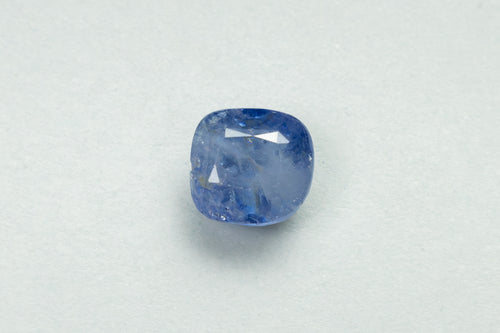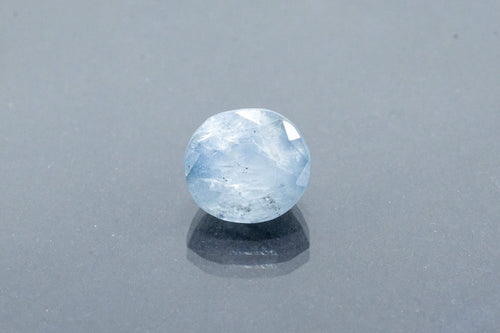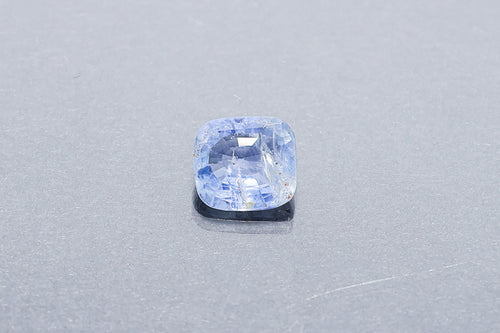


Sapphires are one of the few gemstones that host nearly every known type of inclusion — from fine rutile silk and fingerprint patterns to zircon crystals and liquid-filled cavities. The most common types of inclusions found in sapphire are silk (rutile needles), color zoning, fingerprint inclusions, feathers, crystal inclusions, liquid inclusions, negative crystals, and needle inclusions. While some of these reduce clarity and value, others — like silk in the right amount — can actually make a stone more desirable and even create rare optical phenomena like asterism.
What Are Inclusions in Sapphire, Really?
Before diving into the types, let me clear up a common misconception: inclusions aren't just "flaws." They're nature's way of documenting a sapphire's geological journey — minerals, fluids, and structural patterns that became trapped during crystal growth millions of years ago.
As a gemologist, I look at inclusions under magnification not to find reasons to reject a stone, but to understand it. An inclusion can tell me where a sapphire came from, whether it's been heat-treated, and sometimes whether it's even natural at all.
Here's something interesting: a completely inclusion-free sapphire is often viewed with suspicion in the trade. Natural sapphires almost always carry something inside them.
Types of Inclusions in Sapphire

1. Silk (Rutile Needles)
Silk is arguably the most famous and most misunderstood inclusion in the world of sapphires.
These are extremely fine, hair-like needles made of titanium dioxide (rutile) that crisscross inside the stone, often in two or three intersecting directions. When you hold a silky sapphire under light, it has a soft, almost glowing inner luminosity — that's the light scattering off thousands of microscopic needle surfaces.
In moderate amounts, silk can genuinely improve the look of a sapphire. It softens harsh color, adds depth, and creates that velvety appearance you see in many fine Ceylon (Sri Lanka) stones. In heavy amounts, it makes the stone appear hazy or milky.
Silk is also the reason star sapphires exist. When rutile needles are dense and well-oriented, they create a phenomenon called asterism — the six-rayed star visible on a cabochon sapphire.
One more crucial point: the presence of intact, undissolved silk is one of the strongest indicators that a sapphire has not been heat-treated. Heat treatment dissolves silk, so if it's present in its original form, you're likely looking at an unheated stone — which carries a significant premium.
| Silk Condition | What It Tells You |
|---|---|
| Fine, intact, well-oriented needles | Likely unheated; may command premium |
| Partially dissolved or dotted halos | Heat treatment suspected |
| Dense/abundant silk | Can appear hazy; lowers clarity grade |
| Three-directional silk pattern | Potential for asterism (star effect) |
2. Color Zoning
Color zoning refers to uneven distribution of color inside the stone — bands or patches of deeper and lighter color running through the crystal. It happens because trace elements (like iron and titanium) weren't distributed evenly during crystal growth.
In rough form, zoning is extremely common. The cutter's job is to position the zone so that when you look at the finished stone face-up, the color reads as even and rich. A skilled lapidary can orient the cut so a deep color zone sits near the culet and floods the whole stone with color.
Blue sapphires from Sri Lanka and Kashmir are particularly known for angular color zoning. Madagascar stones tend to show more irregular banding.
Color zoning doesn't always hurt a stone's value — if the final appearance is beautiful and uniform, many buyers and dealers don't mind it at all.
3. Fingerprint Inclusions
These are one of my personal favorites to show clients under a loupe, because they're genuinely stunning when you look closely.
Fingerprint inclusions are networks of tiny, liquid-filled tubes arranged in curved, flowing patterns — and yes, they really do look like a human fingerprint. They form when a sapphire partially heals a fracture during its growth. Fluid gets trapped in the healing zone, and over millions of years the tubes solidify into these intricate patterns.
They're common in sapphires from Sri Lanka and Madagascar. In small amounts, they don't affect a stone's appearance at all. In larger, denser concentrations, they can reduce transparency.
4. Feathers (Fractures and Cleavage Planes)
A feather is essentially a small fracture or crack inside the stone. Under magnification, it often looks like — you guessed it — a delicate white feather. It can also appear as a glassy, reflective plane depending on how the light hits it.
Feathers are the one type of inclusion that genuinely demands attention when buying. Here's why:
- A feather that reaches the surface of the stone creates a structural weak point.
- If it's near the girdle or a thin area, a hard knock could extend it.
- Feathers in the table area (top of the stone) are visible to the naked eye and hurt beauty significantly.
Small internal feathers that don't reach the surface are generally stable and less concerning. Still, any feather in a sapphire is worth asking your gemologist about before purchasing.
5. Crystal Inclusions
Sapphires are formed in some of the most mineralogically complex environments on Earth, so it's no surprise they trap other minerals inside themselves during growth. These are called crystal inclusions or mineral inclusions.
Common crystals found inside sapphires include:
| Crystal Inclusion | Appearance | Significance |
|---|---|---|
| Zircon | Tiny, dark crystals with stress halos (halo inclusions) | Common in natural unheated stones; halo confirms natural origin |
| Spinel | Octahedral crystal shapes | Indicates high-temperature metamorphic origin |
| Rutile | Dark, needle-like; associated with silk | Creates silk effect or asterism |
| Calcite | White or transparent grains | Often seen in marble-hosted sapphires |
| Hematite | Reddish to dark metallic flakes | Found in some alluvial stones |
| Mica | Flat, reflective flakes | Adds shimmer; common in certain origin types |
| Tourmaline | Elongated crystals | Rare; notably associated with Kashmir origin |
The zircon halo deserves a special mention — it's a stress crack or "halo" that forms around a zircon crystal because zircon is radioactive and expands slightly over time. When you see halos around zircon crystals, it's a reliable indicator of a natural, unheated stone.
6. Liquid and Fluid Inclusions
Some sapphires trap tiny droplets of liquid — usually water, carbon dioxide, or other fluids — during their formation. These can appear as transparent bubbles, cloudy pockets, or even two-phase inclusions where you can see both a liquid and a gas bubble sitting together inside a tiny cavity.
Liquid inclusions are particularly significant in one important way: they're a strong marker of an unheated sapphire. Heat treatment at high temperatures destroys or alters these delicate fluid pockets. If you see well-preserved liquid inclusions, it strongly suggests the stone hasn't been treated.
They're commonly seen in violet and purple sapphires, as well as some untreated blues from Sri Lanka and Burma.
7. Negative Crystals (Hollow Cavities)
A negative crystal is essentially the absence of material — a void or hollow space inside the sapphire that takes the shape of the host crystal's geometry. These cavities form when a mineral that was growing inside the sapphire either dissolves away or never fully filled the space.
They often look like small, geometric transparent boxes or flat hexagonal shapes under magnification. While visually interesting, large negative crystals can affect transparency.
8. Needles (Boehmite and Other Minerals)
Not all needle inclusions in sapphire are rutile. Boehmite needles — made of aluminum hydroxide — are a common type, especially in heated stones from Thailand and Cambodia. Under magnification, they appear as fine, whitish needles, often distributed evenly throughout the stone.
Boehmite is specifically associated with heat treatment; its presence (or the "dotted" halos left after treatment) can help a gemologist identify that a stone has been heated.
| Needle Type | Composition | Treatment Indicator? |
|---|---|---|
| Rutile silk (intact) | Titanium dioxide | Unheated |
| Boehmite needles | Aluminum hydroxide | Often heat-treated |
| Dissolved silk halos | Rutile remnants | Heat-treated |
| Zircon needles | Zirconium silicate | Unheated, natural |
9. Parting
Parting is sometimes confused with cleavage but it's slightly different. It occurs along specific planes in the sapphire crystal where growth interruptions happened. Parting planes can look like flat, reflective internal surfaces and can sometimes resemble feathers.
In practical terms, parting isn't typically a structural risk the way surface-reaching feathers are, but it can affect how light moves through the stone and lower its transparency.
How Inclusions Affect Sapphire Value
Here's a practical overview for buyers:
| Inclusion Type | Impact on Value | Notes |
|---|---|---|
| Silk (fine, moderate) | Can increase value | Velvety appearance; unheated indicator |
| Silk (heavy/dense) | Decreases value | Stone looks hazy |
| Color Zoning | Neutral to negative | Depends on face-up appearance |
| Fingerprint Inclusions | Minor negative | Usually unnoticeable |
| Feathers (internal) | Moderate negative | Monitor for stability |
| Feathers (surface-reaching) | Significant negative | Structural risk |
| Crystal Inclusions (small) | Minor negative | Often barely visible |
| Zircon with halo | Neutral to positive | Confirms natural, unheated |
| Liquid Inclusions | Neutral to positive | Strong unheated indicator |
| Negative Crystals | Minor negative | Usually small |
| Boehmite Needles | Negative | Associated with heat treatment |
Inclusions and Treatment Detection: Why It Matters
This is the part most buyers don't think about, but it matters a great deal in terms of price.
An unheated natural sapphire with good color can fetch anywhere from 2x to 10x the price of an equivalent heated stone, depending on the origin and quality. The presence of intact rutile silk, pristine liquid inclusions, and zircon halos all support an "unheated" determination — which gemological labs like GIA or Gübelin will confirm in their reports.
When a sapphire is heated, you'll typically see:
- Dissolved or partially melted silk (dotted appearance)
- Stress fractures around crystal inclusions
- Altered or destroyed liquid inclusions
- In some cases, glassy healed fractures from flux healing
If you're spending serious money on a sapphire, always ask for a gemological laboratory report. It's not just a formality — it's your assurance.
Natural vs. Synthetic Sapphire Inclusions
Synthetic sapphires (lab-grown) look chemically identical to natural ones, but their inclusions tell a completely different story.
| Feature | Natural Sapphire | Synthetic Sapphire |
|---|---|---|
| Silk (rutile) | Common | Absent or unusual |
| Color Zoning | Angular/irregular | Curved growth lines |
| Crystal Inclusions | Zircon, spinel, calcite | Gas bubbles, curved streaks |
| Fingerprint Inclusions | Present | Absent |
| Liquid Inclusions | Present | Absent |
| Growth Pattern | Straight or angular | Curved (Verneuil method) |
The curved growth lines in flame-fusion (Verneuil) synthetics are a dead giveaway. No natural sapphire grows with curved banding — that's a direct result of how synthetic corundum crystallizes in a lab.

FAQs
Q: What is the most common inclusion in sapphire?
Silk (rutile needles) is the most commonly encountered inclusion in natural sapphires, particularly in stones from Sri Lanka (Ceylon). It appears as fine, intersecting needle-like structures and is present in varying degrees in a large proportion of natural blue sapphires.
Q: Do sapphire inclusions affect durability?
Most inclusions — like silk, color zoning, fingerprints, and small crystals — don't affect durability at all. The exception is feather inclusions that reach the stone's surface. These can be weak points, especially if they're located near the girdle or in a thin part of the stone.
Q: Can inclusions help identify if a sapphire is natural?
Absolutely. Intact rutile silk, zircon halos, fingerprint inclusions, and liquid inclusions are all strong indicators of natural origin. Synthetic sapphires typically don't contain these features. Lab reports from GIA, Gübelin, or SSEF can formally confirm natural origin.
Q: What inclusions indicate an unheated sapphire?
The key indicators of an unheated sapphire are: intact, undissolved rutile silk; pristine liquid/fluid inclusions; zircon crystals with well-preserved stress halos; and the absence of glassy healed fractures or dissolved silk remnants. These features are typically destroyed or altered by heat treatment.
Q: Are eye-clean sapphires always more valuable?
Not necessarily. An eye-clean sapphire with a washed-out color isn't as valuable as one with slight inclusions but a rich, saturated hue. Color is the primary value driver in sapphires. Clarity matters, but it's considered alongside color, origin, and treatment status. A silky, slightly included Kashmir sapphire will always outvalue a flawless synthetic.
Q: What is a fingerprint inclusion in sapphire?
A fingerprint inclusion is a healed fracture zone inside the sapphire that traps tiny tubes of fluid arranged in curved, fingerprint-like patterns. They form naturally during crystal growth as the sapphire self-heals cracks. They're common in Sri Lankan and Madagascan sapphires and are considered a natural characteristic.
Q: Can I see sapphire inclusions without a loupe?
Some inclusions — like heavy silk, prominent feathers, or large crystal inclusions — can be visible to the naked eye. Others require 10x magnification (a standard loupe) or even higher magnification under a gemological microscope to identify properly.
Q: Does color zoning affect a sapphire's value?
It depends. If the zoning is visible face-up and makes the stone look uneven or pale in patches, it reduces value significantly. But if a skilled cutter has oriented the stone so the color reads as rich and uniform face-up, color zoning may not affect the stone's desirability much at all.