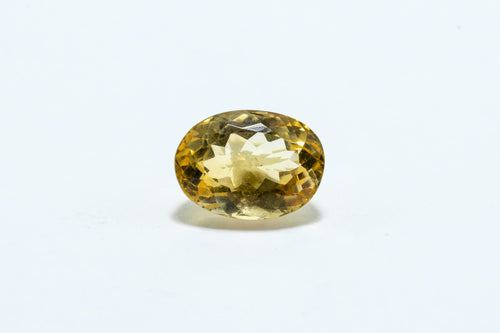


Why People Get Confused Between These Two
If you've ever walked into a gemstone shop and pointed at a golden-yellow stone, chances are the seller had to clarify — "Is this a yellow sapphire or a citrine?" And honestly, that's a fair confusion.
Both stones share a warm, sunny yellow color. Both look stunning in jewelry. And both have been used for centuries for their beauty and supposed powers. But when you dig a little deeper, the difference between citrine and yellow sapphire is massive — in terms of origin, hardness, astrological power, and price.
Whether you're buying a gemstone for jewelry, for Vedic astrology, or for crystal healing, knowing what you're picking up matters a lot. So let's break it all down in the simplest way possible.
| Feature | Yellow Sapphire (Pukhraj) | Citrine (Sunela) |
|---|---|---|
| Mineral Family | Corundum | Quartz |
| Stone Type | Precious | Semi-Precious |
| Mohs Hardness | 9/10 | 7/10 |
| Refractive Index | 1.76 – 1.77 | 1.54 – 1.55 |
| Color Range | Pale to bright yellow, greenish-yellow, orange-yellow | Pale lemon to deep honey amber |
| Clarity | May have natural inclusions (feathers, needles) | Mostly eye-clean |
| Ruling Planet | Jupiter (Guru/Brihaspati) | No fixed planet (mild Jupiter energy) |
| Astrological Use | Primary gemstone | Substitute (upratna) |
| Price (approx.) | ₹1,000 – ₹1,00,000+ per carat | ₹100 – ₹500 per carat |
| Best For | Vedic astrology, fine jewelry, investment | Crystal healing, affordable jewelry |
What is Yellow Sapphire (Pukhraj)?
Yellow Sapphire, known as Pukhraj Gemstone in Hindi, is a precious gemstone from the Corundum mineral family — the same family as Ruby and Blue Sapphire. It gets its beautiful yellow color from iron and titanium trace elements present during its formation deep within the Earth's crust, under immense heat and pressure over millions of years.
In the world of gemstones, Yellow Sapphire holds a very high status. It is classified as a precious gemstone, which means it ranks alongside diamonds, rubies, and emeralds in terms of rarity and value.
In Vedic astrology, Yellow Sapphire is considered one of the most powerful stones. It is directly associated with Jupiter (Brihaspati/Guru) — the planet of wisdom, wealth, and spirituality. Wearing a Pukhraj stone is believed to bring prosperity, good health, marital happiness, and spiritual growth to the wearer.
👉 Want to know more about its detailed benefits? You can read everything about Yellow Sapphire benefits and its impact on your life.
What is Citrine (Sunela)?
Citrine, known as Sunela in Hindi, is a semi-precious gemstone from the Quartz mineral family. The name "Citrine" comes from the French word Citron, meaning lemon — which pretty much describes its light, lemon-yellow color beautifully.
Here's something interesting: natural citrine is actually quite rare. Most of the citrine you see in the market today is created by heat-treating amethyst or smoky quartz. The heat transforms the purple or brown hue into the warm yellow that citrine is known for. These treated stones are still considered genuine citrine because they share the same chemical composition.
In Vedic astrology, Citrine is often recommended as a substitute (upratna) for Yellow Sapphire — useful when someone cannot afford a Pukhraj or when Jupiter's placement in their birth chart calls for a milder stone. In Western astrology, Citrine is an alternate birthstone for November.
Citrine is also called the "Merchant's Stone" or "Success Stone" — it is believed to attract wealth, boost confidence, remove negativity, and help with anxiety and depression.
Difference Between Citrine and Yellow Sapphire

1. Color and Appearance
At first glance, both stones can look very similar — especially under artificial lighting. But when examined carefully, there are noticeable differences.
- Yellow Sapphire comes in a range of shades from pale yellow to intense canary yellow, greenish-yellow, and even orange-yellow. The color depends on the amount of iron present in the stone. Bright, pure canary yellow sapphires are the most sought-after and command the highest prices in the market.
- Citrine, on the other hand, ranges from a soft, pale lemon yellow to a deep golden amber or brownish-orange. The color is generally warmer and softer compared to the intense saturation often seen in a fine yellow sapphire.
One practical difference: Yellow Sapphire tends to have a more vibrant, saturated look, while Citrine often appears more warm and honey-toned. If you put both side by side under natural light, an experienced eye can usually tell them apart pretty quickly.
2. Hardness and Durability
This is one of the most significant practical differences between the two stones.
- Yellow Sapphire scores a 9 on the Mohs scale of hardness — second only to diamond (which is 10). This makes it an extremely tough, scratch-resistant gemstone. You can wear a Yellow Sapphire ring every single day without worrying about it getting damaged easily. It's built for the long run.
- Citrine scores a 7 on the Mohs scale. While it is still reasonably durable and suitable for most types of jewelry, it is more prone to scratches and chipping compared to Yellow Sapphire. If you're getting a citrine ring, you'll need to take slightly more care — avoid harsh surfaces, and clean it gently.
In short, if durability and everyday wear are important to you, Yellow Sapphire wins this round clearly.
3. Clarity and Inclusions
- Yellow Sapphire, being formed under extreme pressure, often contains natural inclusions — tiny feathers, needle-like structures, or crystal formations inside the stone. These are completely natural and are actually used by gemologists to verify authenticity. Paradoxically, a Yellow Sapphire with no inclusions at all can sometimes raise a red flag — it might be synthetic.
- Citrine is usually eye-clean, meaning you won't see inclusions with the naked eye. This gives it a cleaner, more glass-like look. However, remember that most citrine on the market is heat-treated amethyst — so that "natural clarity" you see may actually be a result of the treatment process.
👉 If you're wondering who should actually be wearing Yellow Sapphire based on their birth chart and planetary positions, this guide on who should wear Yellow Sapphire will give you a clear picture.
4. Brilliance and Refractive Index
The refractive index determines how much a stone bends and reflects light — which directly affects its sparkle and brilliance.
- Yellow Sapphire has a refractive index of 1.76–1.77, giving it excellent brilliance and a near diamond-like sparkle. When cut well, a Yellow Sapphire can truly dazzle.
- Citrine has a refractive index of 1.54–1.55, which is considerably lower. It's not a dull stone by any means — it has a warm, attractive glow — but it simply cannot match the fire and brilliance of a Yellow Sapphire. The choice of cut becomes more important for citrine, as a good cut can significantly enhance its shine.
5. Astrological Significance: Yellow Sapphire vs Citrine
This is perhaps the most important factor for buyers in India and those following Vedic astrology.
Yellow Sapphire is a primary Jyotish gemstone. It directly represents Jupiter — the most powerful and benefic planet in Vedic astrology. Wearing a natural, untreated Pukhraj is believed to strengthen Jupiter in the birth chart, bringing blessings related to wisdom, wealth, children, marriage, and spiritual progress. It is especially recommended for Sagittarius (Dhanu) and Pisces (Meen) zodiac signs. Lawyers, judges, teachers, and academics are said to benefit tremendously from this stone.
Citrine, in classical Vedic astrology, is not considered a primary Jyotish gemstone. It carries mild Jupiter energy and is used as a substitute when a person cannot wear or afford Yellow Sapphire. However, it is important to note that Citrine does not carry the same astrological potency as Pukhraj — it's a softer, gentler alternative. In modern crystal healing, though, Citrine is highly valued for emotional balance, positivity, and manifestation.
6. Price Difference: Citrine Stone vs Yellow Sapphire
The price gap between these two stones is quite significant — and that's exactly why people sometimes confuse one for the other (or why some sellers try to pass off Citrine as Yellow Sapphire to unsuspecting buyers).
Yellow Sapphire (Pukhraj): Being a precious gemstone with high hardness, rarity, and strong astrological demand, Pukhraj stone prices start from around ₹1,000 per carat and can go all the way up to ₹1,00,000+ per carat for high-quality, Ceylon-origin, unheated stones. Factors like origin (Ceylon/Sri Lanka is most prized), color intensity, clarity, treatment status, and certification all affect the final price.
Citrine (Sunela): As a semi-precious, more widely available gemstone, Citrine is considerably more affordable. Prices typically start from as low as ₹100–₹500 per carat, making it accessible to almost everyone.
👉 Speaking of which, if you're also considering other yellow gemstones as alternatives, it's worth understanding how Yellow Sapphire compares to Yellow Topaz, another commonly confused stone.
Can Citrine Replace Yellow Sapphire?
This is a question that comes up very often — and the answer is nuanced.
For jewelry purposes: Yes, absolutely. Citrine is a beautiful stone that looks stunning in rings, pendants, and earrings. If budget is a concern and you just want a lovely yellow gemstone for your collection, Citrine is a perfectly valid choice.
For crystal healing and emotional wellness: Citrine is actually quite powerful in its own right. Its association with positivity, abundance, and the solar plexus chakra makes it a popular choice for healers and spiritual practitioners.
For Vedic astrology: This is where you have to be more careful. Citrine is often recommended as a substitute for Yellow Sapphire — and while it can offer some benefits, it simply does not carry the same astrological strength as a genuine Pukhraj. If your astrologer has specifically prescribed Yellow Sapphire for your planetary chart, it's best not to substitute it with Citrine without consulting them first.
In short: Citrine is a wonderful gemstone, but it is not a like-for-like replacement for Yellow Sapphire in an astrological context.
👉 Also, another important factor to consider when purchasing is whether the stone is natural or synthetic. You can read more about natural vs synthetic Yellow Sapphire to understand what to look for and avoid.
Final Thoughts
Yellow Sapphire (Pukhraj) is a rare, precious, highly durable gemstone with strong astrological power and high market value. Citrine (Sunela) is an affordable, beautiful semi-precious stone that shines in crystal healing and everyday jewelry. When it comes to citrine stone vs yellow sapphire in an astrological context, the Pukhraj wins hands down. But for those on a budget or looking for emotional and creative energy, Citrine holds its own wonderfully.
The key is to always buy from a trusted source, ask for proper certification, and — if buying for astrological purposes — always consult a knowledgeable astrologer before making your choice.

Frequently Asked Questions (FAQs)
1. What is the main difference between Citrine and Yellow Sapphire?
The primary difference lies in their mineral composition and value. Yellow Sapphire belongs to the Corundum family and is a precious gemstone, while Citrine is a semi-precious stone from the Quartz family. Sapphire is much harder (9 on the Mohs scale) and more expensive compared to Citrine, which is softer (7 on the Mohs scale).
2. How to identify original yellow sapphire?
To identify original Yellow Sapphire (Pukhraj) has high brilliance and feels heavy when held in the palm. To identify it, look for natural inclusions like tiny "feathers" or "fingerprints" under magnification. A genuine stone will never have air bubbles, which are common in glass imitations. Also, it should feel cool to the touch initially.
3. Which stone is more powerful for astrological benefits?
Yellow Sapphire is considered significantly more powerful because it is the primary gemstone for the planet Jupiter (Guru). It is known for its fast-acting results in wealth, health, and marriage. Citrine is its "Upratna" (substitute); while it also represents Jupiter, its energy is much milder and takes longer to show results.
4. Can I wear Citrine as a substitute for Yellow Sapphire?
Yes, you can wear Citrine as a budget-friendly substitute for Yellow Sapphire. Since both stones resonate with Jupiter's energy, Citrine is an excellent choice for those who cannot afford a high-quality Pukhraj. However, for serious astrological purposes, a larger Citrine stone is often recommended to compensate for its milder energetic influence.
5. Why is there such a massive price gap between the two?
The price difference is due to rarity and durability. Yellow Sapphire is rare, especially in high clarity and natural color, making it a precious investment. Citrine, being a variety of quartz, is found abundantly in nature. Additionally, Sapphire’s superior hardness makes it more durable for lifelong wear, further increasing its market value.
6. How do the colors of Citrine and Yellow Sapphire differ?
While both are yellow, their shades vary slightly. Yellow Sapphire usually has a brilliant, vivid lemon-yellow or deep golden hue with high luster. Citrine often has a pale yellow to brownish-orange tint. Most commercial Citrine is actually heat-treated Amethyst, which gives it a slightly more reddish or burnt-orange undertone than natural Pukhraj.