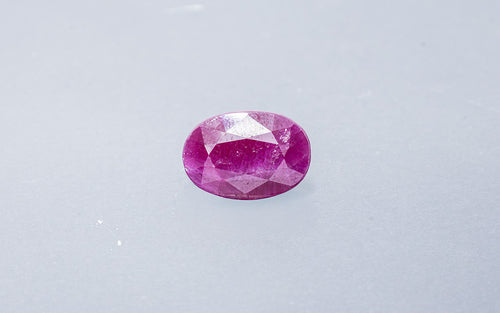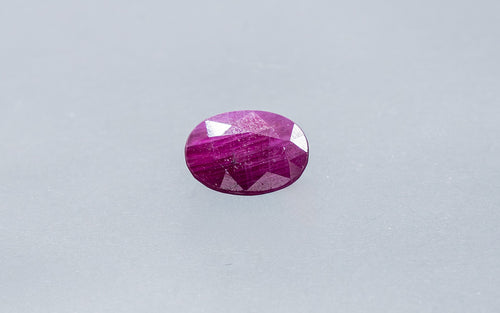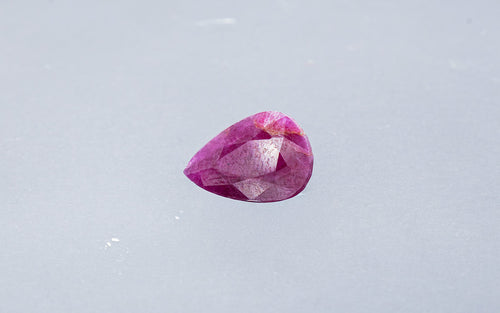


Longido Ruby is a natural ruby variety mined in the Longido district of Tanzania's Arusha Region, near the foothills of Mount Kilimanjaro, known for its bright crimson-red colour, unusually high chromium content, and a distinctive geological occurrence called "ruby-in-zoisite," where ruby crystals form embedded in a green zoisite matrix. While the deposit has been known for over a century, it was historically valued mainly for carving-grade material — it's only since 2017 that facet-grade Longido Ruby, suitable for fine jewellery, gained real recognition in the international gem trade.
I've had a growing number of clients ask about Longido Ruby recently, mostly because it's started showing up more often as a more affordable, ethically-traceable alternative to Burmese ruby. It's a genuinely interesting stone once you understand where it comes from and what makes its chemistry unique. Here's everything worth knowing.
Where Longido Ruby Comes From

Longido sits along Tanzania's Great North Road, between the Serengeti plains and the foothills of Mount Kilimanjaro, within the broader Arusha Region — part of East Africa's Great Rift Valley, one of the richest gem-bearing formations on the planet. The deposit lies within the Mozambique Orogenic Belt, a geological formation shared with neighbouring gem-rich regions in Mozambique and Zambia, which is why several notable African corundum sources sit in relatively close proximity to one another.
Ruby has been known to occur in this district for around a hundred years, making it one of the longest-documented ruby occurrences on the African continent. For most of that history, though, Longido ruby was known almost exclusively as an ornamental and carving material rather than a source of gem-quality faceted stones.
What Makes Longido Ruby Different: Ruby-in-Zoisite
The defining feature of Longido's ruby deposit is a striking natural formation known as "ruby-in-zoisite" — large red corundum crystals embedded directly within a vivid green zoisite matrix, often speckled with black amphibole. This combination of deep red ruby against bright green host rock is visually unlike almost anything else in the gem world, and for decades it was this ornamental "ruby-in-zoisite" material, rather than cut gemstones, that Longido was best known for.
That changed around 2017, when gem dealers began identifying facet-grade rough coming out of the same deposit — clean enough crystal material to be cut into transparent, jewellery-quality rubies rather than used purely for carving or decorative slabs.
Colour and Chemical Composition
Longido Rubies are recognised for a bright, intense crimson-red colour with a medium saturation and tone that's often described as close to the trade's ideal for ruby colour. What sets them apart chemically is an unusually high chromium content combined with relatively low iron — chromium being the element responsible for red colour in corundum, and lower iron typically allowing that red to appear more vivid and less muted or brownish.
This chemical signature is distinctive enough that gemological laboratories can use it, alongside internal inclusion patterns, to help confirm a ruby's Longido origin — an important detail for buyers who want origin-verified stones rather than generically labeled "African ruby."
Final Thoughts
Longido Ruby offers a compelling combination of vivid colour, distinctive geological origin, and relative affordability compared to more established ruby sources like Myanmar. Its ruby-in-zoisite formation gives it a unique place in gemstone history, while its chemistry — high chromium, low iron — gives it a genuinely attractive red that holds up well under different lighting.
Whether you're buying for jewellery or for astrological purposes, the same rule applies as with any natural gemstone: insist on proper certification confirming origin and treatment before you buy.

FAQs
Q1. What is Longido Ruby?
Longido Ruby is a natural ruby mined in the Longido district of Tanzania, known for its bright crimson-red colour, high chromium content, and its occurrence alongside green zoisite rock.
Q2. Where is Longido Ruby found?
Longido Ruby is found in Tanzania's Arusha Region, near Mount Kilimanjaro, within the geologically rich Mozambique Orogenic Belt in East Africa's Great Rift Valley.
Q3. What is ruby-in-zoisite?
Ruby-in-zoisite refers to the natural formation where red ruby crystals occur embedded within a green zoisite matrix, a distinctive feature of the Longido deposit historically used for ornamental carving.
Q4. Is Longido Ruby a good alternative to Burmese Ruby?
Yes, Longido Ruby offers a similarly vivid red colour at a comparatively more affordable price, making it an increasingly popular alternative to premium Burmese ruby.
Q5. Can Longido Ruby be worn for astrological purposes?
Yes, since Vedic astrology classifies all natural, untreated rubies as Manik regardless of specific origin, a certified natural Longido Ruby can be worn for the same Sun-related astrological benefits as ruby from any other source.
Q6. How can I verify if a ruby is genuinely from Longido?
A gemological laboratory can confirm Longido origin through trace element analysis, particularly its distinctive high chromium and low iron content, along with characteristic internal inclusions.
Q7. When did Longido Ruby become popular for jewellery?
Facet-grade Longido Ruby gained recognition in the international gem trade around 2017, after being historically known mainly as a carving-grade material.