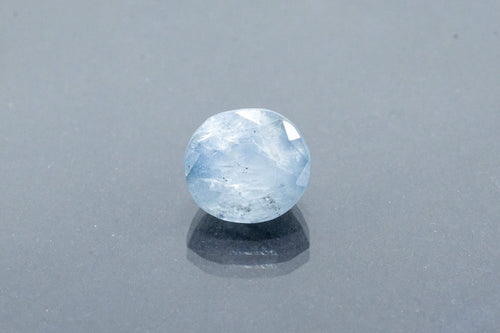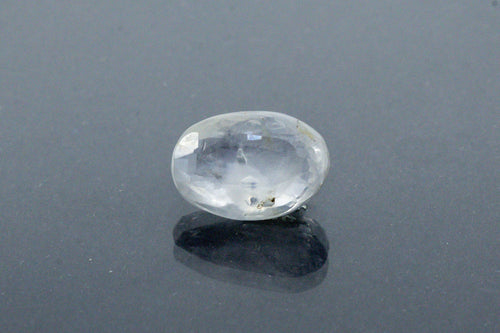


To understand How to identify original blue sapphire, you need to examine its physical, optical, and internal properties. A real blue sapphire (Neelam) has specific gemological characteristics like high hardness, defined refractive index, natural inclusions, and proper density. When learning how to identify real blue sapphire, it is important to rely on scientifically proven gem testing methods along with basic home checks to detect fake stones.
Professional Methods to Identify Real Blue Sapphire
- Refractive Index Test: The most accurate way for how to identify original neelam is by measuring its refractive index using a refractometer. Natural blue sapphire has an RI between 1.762 and 1.770. If the value falls outside this range, the stone is not natural corundum. This test is widely used in gemological laboratories.
- Specific Gravity Test: Another reliable method for identify real neelam is density measurement. Natural sapphire has a specific gravity between 3.95 and 4.03. Gem labs perform hydrostatic weighing to confirm this. A lower density usually indicates imitation or synthetic material.
- Microscopic Inclusion Examination: When experts check to identify fake blue sapphire, they study the stone under 10x–40x magnification. Natural sapphires usually show rutile silk, mineral crystals, or fingerprint inclusions. Synthetic sapphires often show curved growth lines or unnatural clarity. Inclusion analysis is one of the most trusted gem identification methods.
- UV Light Testing: Under ultraviolet light, natural blue sapphire may show weak fluorescence. Strong or unusual fluorescence may indicate synthetic origin. However, UV testing alone cannot confirm authenticity and must be combined with other tests.
- Certification: The safest method to identify original blue sapphire is to ask for certification from a recognized gemological laboratory. A certificate confirms whether the stone is natural, treated, or synthetic.

How to Identify Original Blue Sapphire at Home
If you want to know How to identify original blue sapphire at home, there are practical steps you can follow. These are preliminary checks and help in understanding how to identify fake neelam before going to a lab.
- Check for Air Bubbles: Hold the gemstone under strong light and rotate it slowly. If you see round air bubbles inside, it is likely glass imitation. Natural sapphire does not contain gas bubbles.
- Observe Color Zoning: To understand how to identify real blue sapphire, look at the stone under sunlight. Natural sapphires often show slight color variations or zoning. If the color looks perfectly uniform and flat, it may be synthetic.
- Perform the Fog Test: Breathe gently on the stone. Real sapphire disperses heat quickly, and the fog disappears within 1–2 seconds. If moisture stays longer, it may be fake.
- Check Weight: Sapphire has higher density than glass. When comparing stones of similar size, a real Neelam feels slightly heavier. This is a simple way for how to identify real neelam at home.
- Inspect Surface Scratches: Blue sapphire is very hard (9 on Mohs scale). If the stone shows multiple scratches or dull edges, it is unlikely to be genuine. This helps in understanding how to identify fake blue sapphire.
Why Choose AstroSage Shop AI
When buying Neelam, authenticity is the most important factor. At AstroSage AI Shop, every Blue Sapphire is carefully sourced and verified for quality standards. Customers searching for original blue sapphire often struggle because fake and synthetic stones are common in the market. That is why purchasing from a trusted and transparent platform becomes essential.

Final Advice
Home methods can help detect obvious imitations, but they cannot guarantee authenticity. For complete confirmation of how to identify original neelam, professional gemological testing and certification are strongly recommended.
People Also Ask
1. How do I check if a blue sapphire is real before buying?
Before buying, examine the stone under bright light for natural inclusions instead of perfect clarity. Avoid stones with air bubbles or overly uniform color. Always ask for a gemological certificate from a recognized laboratory to confirm authenticity. Certification is the most reliable proof.
2. Can a real sapphire have flaws inside it?
Yes, natural sapphires usually contain internal inclusions such as fine lines, mineral spots, or silk-like structures. These natural features are formed during crystal growth. A completely flawless stone is often synthetic or lab-created.
3. What is the quickest home test to spot a fake stone?
The fog test is one of the quickest checks. Breathe gently on the stone; a genuine sapphire disperses heat quickly and clears within 1–2 seconds. If the fog stays longer, it may be glass or imitation material.
4. Do synthetic sapphires look different from natural ones?
Yes. Synthetic sapphires often show curved growth lines under magnification and may appear overly clean. Natural stones typically display straight or angular growth patterns and natural inclusions formed under geological conditions.
5. Why is certification important when purchasing Neelam?
Certification confirms whether the gemstone is natural, treated, or synthetic. It includes details such as refractive index, specific gravity, and origin. Without certification, it is difficult to guarantee authenticity.
6. Is a very cheap blue sapphire likely to be genuine?
In most cases, extremely low prices indicate imitation, glass, or synthetic stones. Natural blue sapphire is a rare and valuable gemstone. If the price seems too good to be true, careful verification is necessary.