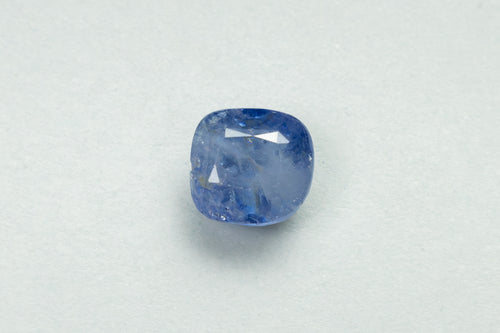


What is a Blue Sapphire Gemstone?
If there's one gemstone that has truly stood the test of time, it's the blue sapphire. Kings wore it, queens adored it, and even today, it sits on one of the most famous engagement rings in the world — Princess Diana's ring, now worn by Kate Middleton.
But what exactly is a blue sapphire? Blue sapphire is a precious gemstone that belongs to the mineral family called corundum, which is essentially aluminum oxide (Al₂O₃). What gives it that gorgeous blue color? Trace amounts of iron and titanium that sneak into the crystal structure during its formation deep within the Earth.
On the Mohs hardness scale, blue sapphire scores a solid 9 out of 10, making it the second hardest gemstone after diamond. This is one of the reasons it's so popular in jewelry — it's beautiful AND durable enough for everyday wear.
| Type | Color | Rarity | Price Range | Best Use |
|---|---|---|---|---|
| Kashmir Blue | Velvety cornflower blue | Extremely rare | Very high | Investment, astrology |
| Burmese Blue | Deep royal blue | Rare | High | Statement jewelry |
| Ceylon Blue | Light to vivid royal blue | Widely available | Moderate–High | Jewelry, astrology |
| Thai Blue | Twilight/dark blue | Available | Moderate | Commercial jewelry |
| Australian Blue | Dark navy/black-blue | Widely available | Low–Moderate | Budget jewelry |
| Montana Blue | Light to medium blue | Limited | Moderate | Ethical jewelry |
| Madagascar Blue | Vivid pure blue | Increasingly available | Moderate–High | Quality jewelry |
| Star Sapphire | Blue with star effect | Moderately rare | Moderate–High | Collector pieces |
| Color-Change | Blue to purple | Rare | High | Collector pieces |
Why Does Blue Sapphire Come in So Many Types?
Good question! The short answer is: geography and geology.
Every sapphire forms in a unique geological environment. The specific minerals, pressure, temperature, and chemical conditions present during formation are what give each sapphire its individual character. A sapphire from the icy Himalayan mountains of Kashmir simply cannot replicate the conditions of a mine in Sri Lanka or Myanmar.
This is why two blue sapphires sitting next to each other might look completely different — one could be a deep velvety blue, while the other might sparkle with a bright cornflower hue. These differences make blue sapphire collecting incredibly fascinating.
There are two main ways to classify types of blue sapphire gemstones:
- By Origin — where the sapphire was mined
- By Color and Shade — what it looks like visually
Let's start with origin-based types, because this is where most of the prestige and value differences come from.
👉 Want to make sure you're buying the right gemstone?
Types of Blue Sapphire by Origin

1) Kashmir Blue Sapphire
If you ask any gemologist what the finest blue sapphire in the world is, they will almost always say: Kashmir blue sapphire.
These loose gemstones were first discovered in the Zanskar Range of the Himalayas, in the Kashmir valley, back in the 1880s. Mining was active for roughly 40 years, and then the mines essentially dried up. Today, Kashmir blue sapphires are no longer actively mined, which makes them extraordinarily rare.
So what makes them so special?
It's their unique color — a rich, velvety cornflower blue with a soft, almost dreamy quality to it. Gemologists describe this as a "sleepy" look, where the stone seems to glow from within. This silky appearance comes from tiny needle-like inclusions (called "silk") inside the stone that scatter light in a beautiful way.
Because Kashmir sapphires are no longer available from the source, certified stones from this region command incredibly high prices — often selling for millions of dollars at auction houses like Sotheby's and Christie's. Even a small certified Kashmir blue sapphire can cost significantly more than a larger stone from any other origin.
Key Features of Kashmir Blue Sapphire:
- Color: Deep velvety cornflower blue to violet-blue.
- Clarity: Soft, silky texture with needle-like inclusions.
- Availability: Extremely rare — no longer mined.
- Price: Highest among all blue sapphires.
- Best For: Collectors, investors, astrological use.
2) Burmese (Burma) Blue Sapphire
Second only to Kashmir in terms of prestige, the Burmese blue sapphire is a gem that collectors and connoisseurs absolutely love.
These sapphires come from Myanmar (formerly Burma), specifically from the Mogok region — the same legendary mining area that produces some of the world's finest rubies. Mining here has been happening for over a thousand years, which tells you just how gem-rich this part of the world is.
Burmese blue sapphires are known for their intense, deeply saturated blue color, often described as "Royal Blue." They tend to be darker than Kashmir sapphires and have a rich, vivid quality that makes them incredibly striking in jewelry.
One important thing to note: because mining in Myanmar is now quite limited and sporadic, Burmese blue sapphires have also become increasingly rare. This rarity, combined with their exceptional quality, makes them one of the most sought-after blue sapphires on the market.
Key Features of Burmese Blue Sapphire:
- Color: Deep royal blue with purplish undertones.
- Clarity: Transparent to eye-clean; rich saturation.
- Availability: Rare; limited mining activity.
- Price: High — second most expensive after Kashmir.
- Best For: Statement jewelry, high-end collections.
3) Ceylon (Sri Lanka) Blue Sapphire
Here's the one that most people are actually buying when they shop for a blue sapphire — the Ceylon blue sapphire from Sri Lanka.
Sri Lanka has been called the "City of Sapphires," and for very good reason. The country has been producing sapphires for over 2,000 years, and today it remains the largest source of blue sapphires in the world. In fact, it's estimated that the majority of blue sapphires available in the global market come from Sri Lanka.
Ceylon sapphires cover a wide spectrum — from light baby blue to vivid royal blue. The finest ones are known for their brilliant sparkle and exceptional clarity. Many Ceylon sapphires are naturally unheated or only lightly treated, which adds to their value.
The most famous Ceylon sapphire? Princess Diana's 12-carat oval blue sapphire engagement ring — now Kate Middleton's — is a Ceylon sapphire.
What makes Ceylon sapphires a smart choice is their excellent beauty-to-value ratio. They offer great color, clarity, and sparkle at a much more accessible price compared to Kashmir or Burmese stones.
Key Features of Ceylon (Sri Lanka) Blue Sapphire:
- Color: Light blue to vivid royal blue; brilliant sparkle.
- Clarity: Often very clear, even in unheated form.
- Availability: Widely available.
- Price: Moderate to high depending on quality.
- Best For: Everyday jewelry, engagement rings, astrological use.
4) Thai (Bangkok) Blue Sapphire
Thailand has long been one of the most important sapphire mining and trading hubs in the world. Thai blue sapphires are primarily mined in Chanthaburi and Kanchanaburi regions and are widely known for their beautiful twilight blue color.
One thing that sets Thai blue sapphires apart is that most of them undergo heat treatment, which enhances their color and clarity. This is actually a very common and accepted practice in the gemstone industry. Post-treatment, these stones show excellent transparency and a beautiful, consistent blue hue.
Bangkok is also a major sapphire cutting and trading center, which means that sapphires from other parts of the world — like Australia and Madagascar — are often sent here to be cut and polished.
Key Features of Thai (Bangkok) Blue Sapphire:
- Color: Deep twilight blue to inky blue.
- Clarity: Excellent after heat treatment.
- Availability: Fairly available.
- Price: Moderate.
- Best For: Jewelry, especially for those who prefer darker blues.
5) Australian Blue Sapphire
Australian blue sapphires are a bit of an outlier in this list. Unlike the rich blues of Kashmir or Ceylon, Australian sapphires tend to have a very dark, almost ink-like blue color — sometimes with greenish or blackish undertones.
These sapphires are mined in areas like Queensland and New South Wales. Because of their very dark color, they are generally considered less valuable than sapphires from other origins. However, when heat-treated, they can be transformed into attractive lighter blue stones used in commercial jewelry.
One interesting fact: a lot of commercial-grade blue sapphire jewelry you see in stores uses Australian sapphires, simply because they are more affordable and widely available.
Key Features of Australian Blue Sapphire:
- Color: Very dark navy blue to near-black.
- Clarity: Moderate.
- Availability: Widely available.
- Price: Generally lower.
- Best For: Commercial jewelry, budget-friendly options.
6) Montana Blue Sapphire
Here's a type of blue sapphire that often surprises people — Montana sapphires from the United States. These are mined in places like the Yogo Gulch in Montana, and they have a distinctly different character compared to their Asian counterparts.
Montana sapphires are typically smaller in size and display a range of colors — from light blue and blue-green to steel blue and gray-blue. The Yogo Gulch stones in particular are known for their unusual bright, cornflower-like blue without needing heat treatment.
For people who specifically want sapphires that are ethically sourced in the USA, Montana sapphires are an excellent option. They also tend to be more affordable than Ceylon or Burmese stones, though they don't command the same prestige.
Key Features of Montana Blue Sapphire:
- Color: Light to medium blue, blue-green; sometimes steel blue.
- Clarity: Generally good, often untreated.
- Availability: Limited but available.
- Price: Moderate.
- Best For: Ethical jewelry buyers, US-made jewelry.
7) Madagascar Blue Sapphire
Madagascar is the newcomer on the global sapphire scene, having emerged as a major source only in the late 1990s. Despite being relatively new to the market, Madagascar blue sapphires have quickly earned a strong reputation.
The best Madagascar sapphires can have a pure, vivid blue color that genuinely rivals stones from Myanmar and even Kashmir. In fact, some Madagascar stones have been compared to Kashmir sapphires in terms of their velvety quality. For buyers who love Kashmir sapphire quality but can't afford the sky-high Kashmir price, Madagascar sapphires are an excellent alternative.
Color-change sapphires — those that shift from blue in daylight to purple under incandescent light — are also found in Madagascar.
Key Features of Madagascar Blue Sapphire:
- Color: Pure vivid blue; can rival Kashmir quality.
- Clarity: Good to excellent.
- Availability: Increasingly available.
- Price: Moderate to high.
- Best For: Quality buyers looking for Kashmir-like appearance at better value.
🔍 Looking for other gemstone options?
Types of Blue Sapphire by Color & Shade
Now let's look at blue sapphires from a different angle — their color and shade. This is equally important because the color is the first thing you notice in any gemstone.

1) Royal Blue Sapphire
This is arguably the most famous and most desired shade. Royal Blue sapphires have a rich, deep blue color with subtle violet or purple undertones. The color is strong, vivid, and immediately commands attention.
The finest royal blue sapphires used to come from Burma's Mogok region, which is why this shade is sometimes synonymous with Burmese quality. Today, you can find royal blue sapphires from Sri Lanka and Madagascar as well.
A royal blue sapphire in high clarity is one of the most valuable types of blue sapphire gemstones you can find.
2) Cornflower Blue Sapphire
If royal blue is bold and dramatic, cornflower blue is refined and elegant. This shade is named after the petals of a cornflower plant — a medium-toned, pure, bright blue with a slight soft quality to it.
Cornflower blue is the color most associated with Kashmir blue sapphires, though Ceylon sapphires also produce exceptional cornflower hues. It's considered one of the most visually perfect shades of blue — not too light, not too dark, just right.
This color is extremely popular for engagement rings because it looks stunning in both daylight and artificial light.
3) Velvet Blue Sapphire
The term "velvet blue" is used to describe sapphires that have an unusual, silky, almost glowing quality — as if the stone has a soft inner light. This is the characteristic most associated with Kashmir blue sapphires.
The velvety look comes from tiny microscopic inclusions inside the stone (called silk) that scatter light in a diffused way, giving it a softer, dreamier appearance rather than a sharp, sparkly one. It's a very distinctive and prized quality.
4) Sky Blue / Light Blue Sapphire
Also called Ceylon blue or cornflower light, these sapphires have a softer, pastel-toned blue color. They're not as intense as royal or cornflower blues, but they have their own delicate charm.
Light blue sapphires are widely available from Sri Lanka and are popular in feminine jewelry designs. They're also more affordable than their deeper-hued counterparts.
5) Indigo Blue Sapphire
Indigo blue sapphires sit on the darker end of the blue spectrum, with tones that border on deep violet-blue or midnight blue. These are often seen in Australian and Thai sapphires.
While they don't command the same prices as cornflower or royal blue stones, indigo blue sapphires have their own unique appeal — especially for people who like darker, moodier gemstones.
Special Varieties of Blue Sapphire
1) Star Blue Sapphire
This is one of the most visually spectacular types of blue sapphire gemstones. When you look at a star sapphire, you'll see a six-rayed star pattern floating on the surface of the stone. This optical phenomenon is called asterism.
The star effect happens because of tiny, needle-like inclusions of rutile (a mineral) inside the stone that are arranged in three intersecting directions. When light hits these inclusions, it reflects in a star pattern.
Star sapphires are always cut as cabochons (smooth, domed surface) rather than faceted, because the flat-top shape is necessary to display the star properly. The finest star sapphires show a sharp, well-centered, even six-pointed star against a vivid blue background.
Twelve-rayed star sapphires exist too, though they are extremely rare and highly valuable.
2) Color-Change Blue Sapphire
This is genuinely one of the most fascinating types of blue sapphire out there. A color-change sapphire literally changes its color depending on the light source.
In natural daylight or fluorescent lighting, these stones appear blue or violet-blue. But when you bring them indoors under incandescent (warm) light, they shift to purple or reddish-violet. It's almost like magic.
This phenomenon is called the alexandrite effect, and it happens due to the presence of specific trace elements (chromium combined with iron and titanium) in the stone. Color-change sapphires come from Madagascar, Myanmar, Sri Lanka, and Tanzania.
Final Thoughts
Blue sapphire is not just one stone — it's a whole world of color, origin, and character. From the legendary velvety glow of a Kashmir sapphire to the brilliant sparkle of a Ceylon, from the mysterious shifting hues of a color-change sapphire to the captivating star pattern of a star sapphire, there is truly a type of blue sapphire for every kind of person and purpose.
Understanding the different types of blue sapphire gemstones helps you make a smarter, more informed decision — whether you're buying for jewelry, astrology, or as an investment. The most important thing is to always buy from a reputable seller, ask for a gemological certificate, and choose the stone that genuinely speaks to you.

Frequently Asked Questions (FAQs)
Q1: What is the rarest type of blue sapphire?
Kashmir blue sapphire is the rarest and most valuable type. Since the mines stopped active production over a century ago, certified Kashmir sapphires are exceptionally hard to find.
Q2: Which blue sapphire is best for astrological purposes?
Natural, unheated blue sapphire is preferred for astrology. Ceylon (Sri Lanka) sapphires are the most popular choice due to their availability and energy. However, Kashmir blue sapphire is considered the most powerful for Saturn's energy.
Q3: How can I tell if a blue sapphire is natural or synthetic?
The best way is to get it certified by a reputable gemological laboratory like GIA, GRS, or IGI. Synthetic sapphires are chemically identical to natural ones but are lab-grown and much less valuable.
Q4: Is cornflower blue sapphire the same as Kashmir sapphire?
Not exactly. Cornflower blue refers to a specific color shade. While Kashmir sapphires are known for their cornflower blue color, not every cornflower blue sapphire is from Kashmir. Ceylon sapphires can also display this beautiful shade.
Q5: What is the difference between a star sapphire and a regular blue sapphire?
A regular blue sapphire is faceted and valued primarily for its color and clarity. A star sapphire is cut as a cabochon and displays a star-shaped pattern on its surface caused by internal needle-like inclusions.
Q6: Difference b/w Heated Sapphire vs Unheated Sapphire?
The main difference b/w heated and unheated sapphire lies in treatment. Most sapphires are "heated" to enhance their color and clarity, which is a common market practice. In contrast, an unheated sapphire is completely natural and remains exactly as it was found in the earth. Because these stones are rare and retain their original energy, unheated sapphires are more valuable and often preferred for astrological purposes.
Q7: What is the best blue sapphire for an engagement ring?
Ceylon blue sapphire is the most popular choice for engagement rings — it offers brilliant color, excellent durability (Mohs 9), and is available at various price points. Princess Diana's iconic ring is a Ceylon sapphire.