

India price guide · Market-wide
Pukhraj (Yellow Sapphire) price in India
Use indicative Indian price bands to shortlist a Pukhraj, then compare treatment, colour, clarity, cut and laboratory evidence before judging any quote.
01 · PRICE OVERVIEW
Overview — How Pukhraj (Yellow Sapphire) price is decided
There is no single official Pukhraj rate
Yellow Sapphire is priced stone by stone. A broad market band is useful for orientation, but the defensible price for an individual gem depends on its colour, transparency, inclusions, cut, treatment, size and the exact claims supported by a laboratory report.
- Price per carat
- Current selling price ÷ verified carat weight
- Ratti conversion
- Carat × 1.09375 (the comparison convention used here)
- Price per ratti
- Current selling price ÷ converted ratti weight
India has no official exchange rate for Pukhraj. Retail asking prices change with the individual stone and seller. Do not assume that a higher quote proves better quality, or that a low quote proves a fake; verify identity, treatment and the seller’s claims.
Yellow Sapphire price bands by buying context
These broad bands summarize advertised Indian retail guidance observed across multiple sellers on 2026-09-24. They are intentionally wider than one store’s catalogue and exclude the cost of a ring or pendant.
| Buying context | Typical signals to verify | Indicative price per carat | Indicative price per ratti |
|---|---|---|---|
| Commercial | Verify identity, colour, clarity and treatment. | ₹2,000–₹5,000 | ₹1,800–₹4,600 |
| Good | Balanced appearance with clear disclosures. | ₹5,000–₹15,000 | ₹4,600–₹13,700 |
| Fine | Stronger colour, better transparency and dependable evidence. | ₹15,000–₹50,000+ | ₹13,700–₹45,700+ |
| Exceptional | Rare quality, larger size and premium documentation. | ₹50,000–₹1,50,000+ | ₹45,700–₹1,37,100+ |
Per-ratti figures use 1 carat = 1.09375 ratti and are rounded. Sellers may use a slightly different ratti convention, so convert every quote with the same formula before comparing.
Check the arithmetic on current store listings
These live AstroSage listings illustrate how total price converts to per-carat and per-ratti rates. They do not define the Indian market bands above. Availability and selling prices can change independently.
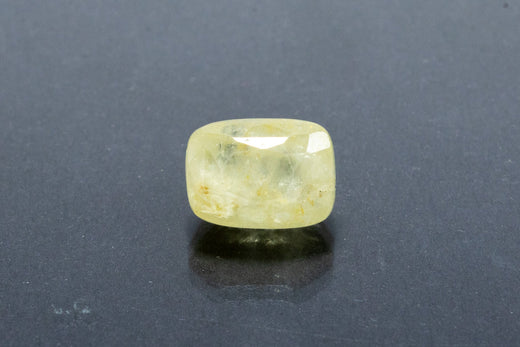
Yellow Sapphire - 11.6 Carat
Rs. 29,000.0011.6 ct · 12.69 ratti
Rs. 2,500/ct · Rs. 2,285.71/ratti
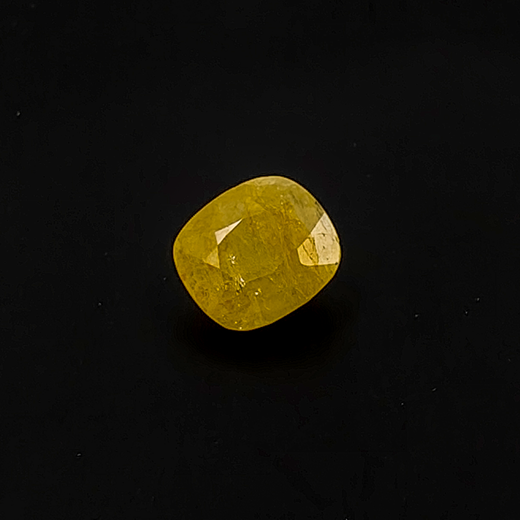
Yellow Sapphire (Burmese) - 6.79 Carat
Rs. 20,549.006.79 ct · 7.43 ratti
Rs. 3,026.36/ct · Rs. 2,766.96/ratti
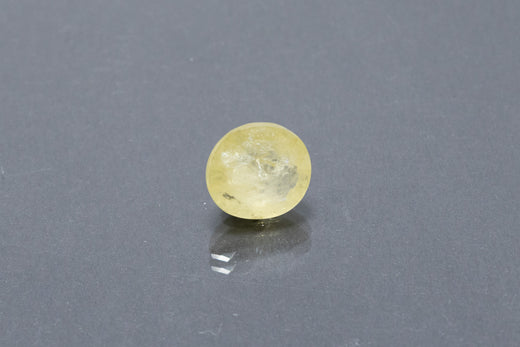
Yellow Sapphire (Ceylon) - 4.71 Carat
Rs. 29,438.004.71 ct · 5.15 ratti
Rs. 6,250.11/ct · Rs. 5,714.38/ratti
Price-per-weight calculator
Enter a total stone price and certificate weight. The calculator applies the same convention used in this guide.
Price per carat: Price per ratti: Ratti:
Enter a valid price and a carat weight greater than zero.02 · VALUE DRIVERS
Factors that affect Pukhraj price
Compare all six factors together. No single factor—not even origin or certification—sets the price by itself.
Color
Compare: Yellow hue, saturation, tone, zoning and face-up brightness in neutral light
Price impact: A lively, even yellow generally commands more than a pale, brownish, overly dark or visibly patchy stone.
Clarity
Compare: Transparency, inclusions, feathers, clouds and whether any feature threatens durability
Price impact: Natural inclusions are expected; their visibility, position and effect on beauty or structural condition influence value.
Carat Weight
Compare: Certified carat weight, dimensions and face-up size; convert every quote with the same ratti convention
Price impact: Larger fine-quality Yellow Sapphires are scarcer, so price per carat may increase rather than scale linearly.
Origin
Compare: Geographic origin only when supported by a qualified laboratory opinion
Price impact: Ceylon, Burma or other origin wording may affect demand, but origin is not a quality grade.
Treatment
Compare: Heat, diffusion, filling or any other detectable enhancement stated separately
Price impact: Treatment type can change rarity, stability, care requirements and market value; natural does not mean untreated.
Certification
Compare: Report number, natural or laboratory-grown identity, weight, measurements and treatment result matched to the stone
Price impact: A report supports disclosed facts but does not set a universal retail price or guarantee every seller claim.
Gemological reference: the GIA Sapphire Buyer’s Guide explains why colour, cut, inclusions, treatment and laboratory identification matter. GIA does not assign a universal retail grade or price to coloured stones.
03 · BUYER TRAPS
Mistakes that make buyers overpay
Paying for origin before quality
Do not pay a Ceylon or Burma premium unless origin is supported and the individual stone also has desirable colour, clarity and cut.
Treating natural as untreated
A mined Yellow Sapphire can still be heated or otherwise treated. Read the report's treatment line separately from identity.
Comparing total price without weight
Recalculate every loose-stone quote per carat and per ratti using one convention before comparing.
Buying a certificate photo
Match the report number, weight and measurements to the actual stone; a generic or mismatched report is not useful evidence.
Ignoring the complete jewellery quote
Metal, setting, labour, taxes, resizing and return eligibility can change the final cost beyond the loose stone.
04 · FINAL DECISION
Conclusion: compare the Yellow Sapphire, not only the rate
Start with identity, then compare color, clarity, carat weight, origin evidence, treatment and certification. Recalculate the loose-stone quote per carat and per ratti, separate jewellery costs, and pay a premium only when the individual Pukhraj supports it.
Colour, weight, treatment and certification are gemological or commercial facts. Associations between Pukhraj and Jupiter, prosperity, marriage or career are traditional astrological beliefs, not guaranteed outcomes or medical advice. Seek a personal consultation if you use gemstones within an astrological practice.
05 · FAQs
Pukhraj price FAQs
What is the price of Pukhraj per carat in India?
Indicative Indian retail asking prices commonly fall around ₹2,000–₹50,000+ per carat. Fine untreated stones with strong colour, transparency and reliable laboratory evidence can exceed ₹1,00,000 per carat. These are broad market bands, not a valuation of an individual stone.
How is Pukhraj price per ratti calculated?
This guide uses 1 carat = 1.09375 ratti for consistent comparison. Divide the loose stone’s total price by its converted ratti weight. Because sellers can use slightly different ratti conventions, confirm the conversion and recalculate every quote on the same basis.
Why can two Yellow Sapphires of similar weight cost very different amounts?
Weight is only one input. Colour, clarity, cut, treatment, certification, origin when verified, rarity and current inventory positioning can all change the price. Compare the lab report and visible product specifications, not only carat or ratti.
Does a Pukhraj price include a ring or pendant?
The market bands on this page refer to a loose stone. A finished ring or pendant can add metal, setting, labour, design, taxes and customization charges. Ask for an itemised quote before comparing sellers.
Is a low-priced Yellow Sapphire fake?
Price alone cannot prove authenticity. Check the laboratory report, identity, weight, treatment disclosure and return policy. If a field is missing, ask for it in writing before purchase.
Pukhraj ki keemat per ratti kaise compare karein?
Sabhi quotes mein ek hi ratti conversion use karein. Is guide mein comparison ke liye 1 carat = 1.09375 ratti use kiya gaya hai. Total loose-stone price ko converted ratti weight se divide karein, phir treatment, colour, clarity, cut aur certificate details bhi compare karein.
Is a heated Yellow Sapphire still natural?
Heat treatment and natural origin answer different questions. A sapphire can be natural and heat-treated; a laboratory-grown sapphire is manufactured rather than mined. The report should identify the material and disclose detectable treatment. Fine untreated material can command a premium because confirmed no-heat stones are rarer.
Does Ceylon origin guarantee a better Pukhraj?
No. Sri Lankan origin can influence buyer preference, but every source produces a range of quality. Judge the individual stone’s colour, transparency, inclusions, cut and treatment first, and accept an origin claim only when it is supported by a reliable laboratory opinion.