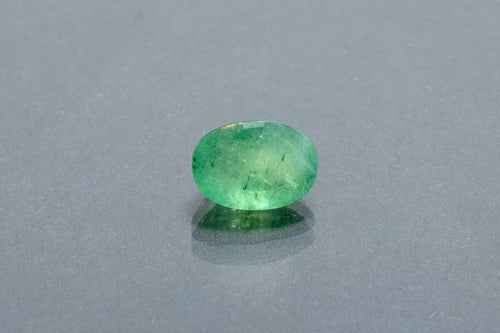


Zambian and Colombian emeralds are chemically similar but look and form differently. Colombian emeralds are known for their bright, pure green colour with a warm tone, and they usually have more visible inclusions. Zambian emeralds tend to have a deeper, bluish-green colour with much better clarity. Neither one is "better" than the other — Colombian stones carry centuries of history and rarity, while Zambian stones offer strong quality with better clarity at a lower price. Which one is right for you depends on your colour preference, budget, and what you're buying the stone for.
Zambian Emerald vs Colombian Emerald: Key Difference
| Parameter | Colombian Emerald | Zambian Emerald |
|---|---|---|
| Famous mines | Muzo, Chivor, Coscuez | Kagem (Kafubu area) |
| Typical colour | Bright, pure green, warm tone | Deep, bluish-green, darker tone |
| Cause of colour | Mostly chromium, very little iron | Higher iron content |
| Clarity tendency | More visible marks (jardin) | Usually cleaner, often eye-clean |
| How it forms | Calcite-shale veins | Metamorphic rock |
| Shine and sparkle | Brighter, more lively | Deeper, richer look |
| Usual treatment level | Often oiled more heavily | Usually treated less |
| Large stone availability | Rarer in fine quality | Easier to find |
| Reputation | Long-established, historic name | Growing fast since the 2000s |
| Relative price | Higher, especially for fine colour | More affordable for similar quality |
Also Check: Types of Emerald
1. Origin and Famous Mines

Colombian emerald has the longer, richer history. Muzo, in Colombia's Boyacá region, is the most famous emerald mine in the world and has been producing fine stones for centuries. Chivor is its historic rival, known for a slightly cooler, more bluish-green colour than Muzo's warmer tone. Coscuez adds even more supply of similarly fine-quality material. All three mines are still active today, and Colombian emerald forms in calcite and shale veins — a process that gives the stone its bright colour and light.
Zambian emerald is a newer name in the trade. Large-scale mining began in the 1970s, but production grew fast after 2008, when big mining companies took over the Kagem mine in the Kafubu area — now considered the largest emerald mine in the world by output. Zambian emerald forms in metamorphic rock instead, which is a completely different process, and this is exactly what shapes its colour and, more importantly, its clarity.
2. Colour: The Most Noticeable Difference

Colour is the biggest factor that sets these two origins apart, and it's usually the first thing a trained eye notices. Colombian emeralds show a bright, pure green, often with a warm, golden tone and strong sparkle — the shade most people picture when they think of an emerald. This comes from chromium being the main colouring element, with very little iron mixed in.
Zambian emeralds lean cooler and darker, often described as forest green or bluish-green. This blue tint comes specifically from a higher amount of iron in the stone's structure — iron absorbs certain light, pushing the colour toward blue and giving Zambian stones a deeper, richer look rather than Colombian emerald's brighter glow.
3. Clarity and Inclusions: Where Zambian Has the Edge
This is the one area where Zambian emerald is usually considered better, and it's a genuinely useful difference, not just a sales point. Emeralds are expected to have natural inclusions — often called "jardin," a French word for garden — so clarity depends a lot on where the stone comes from, not just on treatment.
Colombian emeralds usually show fine, thread-like inclusions formed during their growth process, and it's rare to find a Colombian stone that's fully clean to the eye — most carry visible marks even in top-quality pieces. Zambian emeralds form differently and tend to have fewer, larger inclusions, so many stones look clean to the naked eye even without heavy treatment — a real plus for buyers who want a cleaner-looking stone without paying Colombian prices.
Also Check: Natural Emerald vs Synthetic Emerald
4. Treatment: Oiling in Both Origins
Both Colombian and Zambian emeralds are commonly treated to improve how clean they look, mostly through oiling — filling small surface cracks with natural or man-made oil. This is a widely accepted practice in the emerald trade, as long as it's disclosed. Colombian stones are treated this way more often, since they tend to have more visible marks, and it's common for fine Colombian emeralds to be described as having "minor," "moderate," or "significant" oiling, each affecting value differently.
Zambian stones, since many are already fairly clean, are usually treated less, though this can still vary from stone to stone. Either way, the level of treatment should always be clearly written on the gemstone's certificate, since heavily treated stones are worth much less than lightly treated or untreated ones.
5. Size and Durability
Both origins produce emeralds in a wide range of sizes, but Zambian mines have produced a lot in recent decades, making larger, good-quality Zambian stones somewhat easier to find compared to fine Colombian stones of similar size, which remain genuinely rare. When it comes to durability, both share the same hardness (7.5–8 on the Mohs scale) and need the same kind of care, since this comes from the beryl mineral family itself, not from where the stone was mined. Both should be kept away from hard knocks and ultrasonic cleaning, no matter which country they're from.
Which One Should You Choose?
- Choose Colombian emerald if you care most about bright colour, sparkle, and long-standing reputation, and you're okay paying a higher price for it.
- Choose Zambian emerald if you want good clarity, a deeper colour tone, and better value, especially if you're buying a larger stone or want it for astrological purposes where lighter treatment is preferred.
- For long-term investment, top-quality Colombian stones from Muzo still hold the strongest reputation among collectors, though fine Zambian emeralds are earning respect of their own.
- Either way, always ask for a certificate from a recognised gem lab confirming origin, treatment level, and quality before buying.
Also Check: Panna Stone Price Guide
Final Thoughts
Zambian and Colombian emeralds are two different sides of the same gemstone — one known for its long history, bright colour, and strong sparkle; the other for its cleaner clarity, deeper bluish-green tone, and more affordable price. Neither is a lesser choice; they simply suit different needs, whether that's colour preference, budget, or how the stone will be worn. Whichever one you pick, the certificate — not just the country it came from — is what really tells you what you're paying for.

FAQs
Q1. What is the main difference between Zambian and Colombian emerald?
Colombian emerald is known for its bright, warm green colour with more visible inclusions, while Zambian emerald usually has a deeper, bluish-green tone with better clarity.
Q2. Which is more expensive, Zambian or Colombian emerald?
Colombian emerald is usually more expensive than Zambian emerald of similar size and quality, mostly because of its stronger colour reputation and longer history in the market.
Q3. Which has better clarity, Zambian or Colombian emerald?
Zambian emerald usually has better clarity, often looking clean to the eye, because it forms in metamorphic rock, unlike Colombian emerald's calcite-shale process.
Q4. Are both Zambian and Colombian emeralds treated?
Yes, both are commonly oiled to improve how clean they look, which is a widely accepted practice in the emerald trade, though Colombian stones are usually treated more heavily.
Q5. Is Zambian emerald good for astrological purposes?
Yes, a certified natural Zambian emerald is considered just as good for astrological use as Colombian emerald, since both are called Panna and are linked to Mercury. Zambian stones' lighter treatment can be an added benefit here.
Q6. Which emerald origin is better for an engagement ring?
Both are great choices. Colombian emerald offers a bright, classic green with strong sparkle, while Zambian emerald offers a deeper tone, good clarity, and better availability in larger sizes.
Q7. What causes the bluish tone in Zambian emerald?
The bluish-green tone in Zambian emerald comes from a higher amount of iron in its structure, which is a key chemical difference from Colombian emerald's chromium-based colour.
Q8. Which is rarer, Colombian or Zambian emerald?
Fine-quality Colombian emerald, especially in larger sizes, is usually rarer and more prized by collectors, while Zambia's large-scale mining makes good-quality stones more easily available.