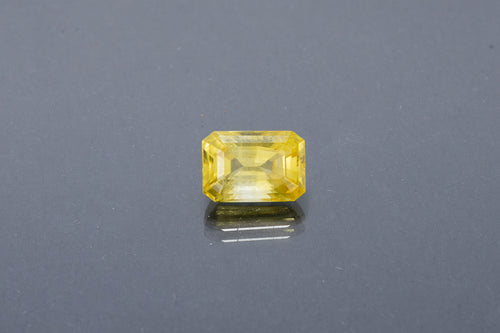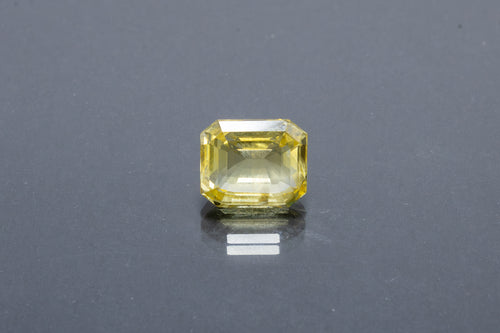

The price of a yellow sapphire (Pukhraj) is decided by its colour, clarity, cut, carat weight, origin, treatment, and certification, along with transparency, whether it is natural or lab-made, and market demand. Colour has the biggest effect. In India, a natural yellow sapphire price starts at around ₹5,000 per carat for light, included stones and reaches ₹80,000 or more for golden-yellow, clean stones. Fine, unheated Ceylon stones can go above ₹1,00,000 per carat.
Two stones of the same weight can differ many times in price. Below are all the factors behind that gap, so you can compare offers properly.
Quick Summary: What Affects Yellow Sapphire Price
| Factor | Higher Price | Lower Price |
|---|---|---|
| Colour | Vivid, even golden or canary yellow | Pale, or with green, brown, or orange tints |
| Clarity | Eye-clean, very few inclusions | Visible inclusions, cloudy look |
| Cut | Well-proportioned, lively sparkle | Poor symmetry, dull or "windowed" look |
| Carat weight | Larger stones of good quality | Small stones, or large stones of poor quality |
| Origin | Sri Lanka (Ceylon) | Thailand, Australia |
| Treatment | Natural and unheated | Heated, diffused, or dyed |
| Certification | Reputed lab report | No report or an unclear one |
| Type | Natural | Lab-created |
1. Colour
Colour is the biggest price driver. The best stones show a pure, warm golden or canary yellow, spread evenly, with strong saturation and no side tints. Pale stones, and stones with a green, brown, or orange touch, cost much less.
| Colour Grade | Look | Approx. Price per Carat |
|---|---|---|
| Light yellow | Pale, soft shade | ₹5,000 to ₹10,000 |
| Medium-light yellow | Noticeable colour | ₹10,000 to ₹30,000 |
| Vivid yellow | Intense, bright yellow | ₹20,000 to ₹60,000 |
| Golden yellow | Rich, warm golden tone | ₹50,000 to ₹80,000 and above |
These are approximate ranges from rates published by Indian sellers. Clarity moves a stone up or down within its range.
2. Clarity
Clarity is how free the stone is from inclusions. Yellow sapphires often have small natural inclusions, and tiny ones do not change the price much. Marks that are visible to the naked eye lower the value.
- Eye-clean stones: about ₹20,000 to ₹50,000 per carat, depending on origin and size
- Stones with visible inclusions: about ₹5,000 to ₹10,000 per carat
3. Cut and Shape
A well-cut stone returns light evenly and shows its colour at its best. A poor cut makes good colour look dull or leaves a see-through patch. Oval, cushion, and round are the common shapes. Some cutters keep extra weight at the cost of proportions, so a heavier stone is not always better.

4. Carat Weight
Large yellow sapphires of good quality are rare, so the price per carat rises as the weight goes up, and it rises faster than the weight itself. A basic 1-carat stone may cost around ₹5,000 to ₹8,000, while a fine 5-carat stone costs far more per carat. But a large stone with poor colour and cut is worth less than a smaller, finer one. Astrologers often suggest a minimum weight, so the weight you need also sets your total budget.
5. Origin
Origin matters because each source gives different colour and clarity.
| Origin | General Market View |
|---|---|
| Sri Lanka (Ceylon) | Known for clean, bright golden-yellow colour; top of the price range |
| Madagascar | Good colour saturation; slightly cheaper than Ceylon |
| Thailand (Bangkok) | Often greenish or brownish tones and usually heat-treated; lower prices |
| Australia | Usually more subdued colour; lower prices |
As a guide, good Ceylon stones sell for about $100 to $400 per carat, while Bangkok stones range from about $50 to $300 per carat. Across all origins, prices run from about $60 to over $1,000 per carat. Ceylon is also the most preferred origin for astrology, which keeps its demand high.
6. Treatment
Many yellow sapphires are heated to improve colour or clarity. Others may be diffused or dyed. Natural, unheated stones are the rarest and cost the most. For Vedic use, unheated and untreated stones are usually preferred. A treated stone is not "fake," but it should be priced lower and the treatment should be stated in the report.
7. Certification
A report from a recognised gem lab confirms the stone's identity, weight, origin, and treatment. A certified stone often costs more because buyers can trust what they are paying for. For a practical report-led checklist, read how to identify original Yellow Sapphire before comparing sellers.
Also Read: How to Read a Gemstone Certificate
8. Natural vs Lab-Created
Lab-created yellow sapphires have the same chemistry as natural ones but cost far less. They are fine for fashion jewellery but not suitable for astrological use. If the price is very low, check that the stone is natural.
9. Transparency and Lustre
A clear, glassy stone with strong shine usually costs more than a hazy or dull one, because transparency lets the colour glow.
10. Market Demand and Supply
Yellow sapphire is popular in India because of its link to Jupiter. Demand for good Ceylon stones stays strong, and limited supply of fine, unheated stones can push prices up over time.
Price per Carat vs Price per Ratti
Indian sellers quote both. Since 1 ratti is about 0.91 carat, the price per ratti is slightly lower than the price per carat for the same stone. Confirm the unit before comparing two offers.

How to Get the Best Value
- Decide your priority first: size, colour, or clarity. You rarely get all three at a low price.
- Put colour first. It gives the most value for the money.
- Accept a small inclusion. A stone with a tiny flaw that is hidden from the eye can look just as good and cost much less than a flawless one.
- Ask for an unheated stone if it is for astrology, and check the report.
- Compare several sellers in the same unit, and see the stone in person or on video if you can.
- If a natural Pukhraj remains outside your budget, compare Yellow Sapphire substitutes by material, durability and intended use.
FAQs
1. What is the price of a yellow sapphire per carat?
In India, the yellow sapphire price per carat starts at around ₹5,000 for light, included stones and reaches ₹80,000 or more for golden-yellow, clean stones. Fine unheated Ceylon stones can go above ₹1,00,000 per carat.
2. What are the factors that affect the price of Pukhraj stone?
The main factors are colour, clarity, cut, carat weight, origin, treatment, and certification. Transparency, whether the stone is natural, and market demand also matter.
3. Which colour of yellow sapphire is the most expensive?
Vivid, golden-yellow stones are the most expensive. Pale stones and stones with green, brown, or orange tints cost much less.
4. Why is Ceylon yellow sapphire more expensive than Bangkok?
Ceylon stones are known for brighter colour and better clarity, and they are more sought after, especially for astrology. Bangkok stones often have weaker colour and are usually heated, so they cost less.
5. Does heat treatment lower the price of yellow sapphire?
Yes. Natural, unheated stones usually cost more than heated ones. Heating is common in the trade, but it should be stated in the report.
6. Does a certificate affect the yellow sapphire price?
Yes. A certified stone often costs more because the report confirms that it is natural and states its origin and treatment.
7. What is the difference between yellow sapphire price per ratti and per carat?
Since 1 ratti is about 0.91 carat, the price per ratti is slightly lower than the price per carat for the same stone.
8. How can I be sure I am paying a fair natural yellow sapphire price?
Ask for a recognised lab report, check the treatment details, and compare similar stones in colour, clarity, origin, and weight, using the same price unit.