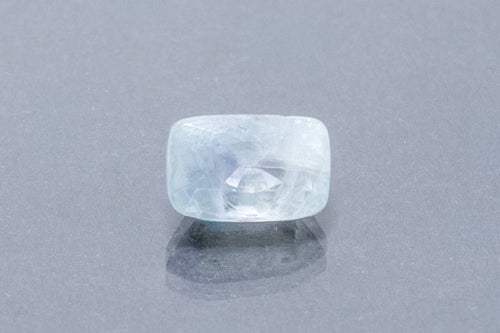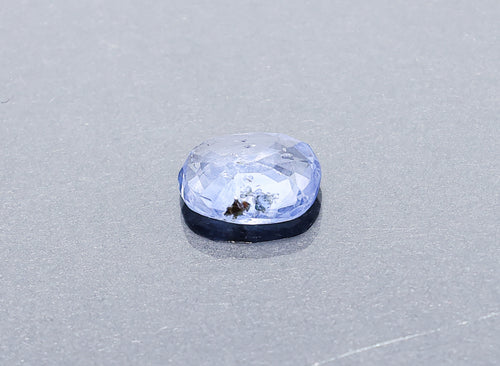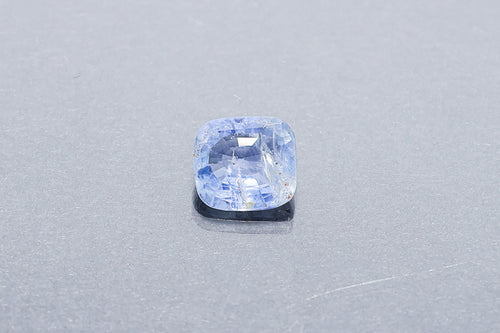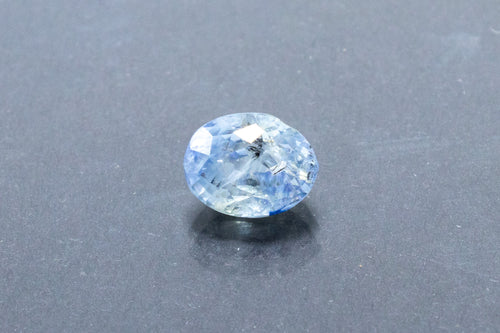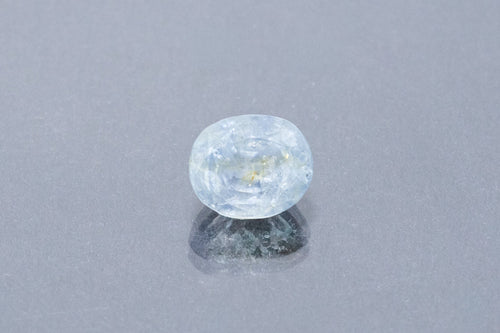


The main difference between a natural blue sapphire and a synthetic blue sapphire is origin: a natural blue sapphire forms inside the earth over millions of years, while a synthetic blue sapphire is grown in a laboratory in a matter of weeks. Both share the same chemical composition (aluminium oxide with traces of iron and titanium) and the same hardness of 9 on the Mohs scale, but the natural stone carries internal characteristics — colour zoning, curved growth lines, tiny mineral inclusions — that a lab-grown stone almost never has. This difference in origin is also why natural sapphires cost significantly more and are the only ones recommended for astrological use.
If you're planning to buy a blue sapphire, that one-line answer probably raised more questions than it settled. So let's break it down properly — how each one forms, how to tell them apart, what they cost, and which one actually makes sense for you.
What Is a Natural Blue Sapphire?

A natural blue sapphire is a variety of the mineral corundum that gets its blue colour from trace amounts of iron and titanium trapped in its crystal structure while it was forming inside the earth. This process takes millions of years and happens under specific conditions of heat and pressure found in only a handful of places on the planet — Sri Lanka (Ceylon), Kashmir, Myanmar, Madagascar, and parts of Thailand and Australia.
Because it forms slowly and unevenly, a natural sapphire almost always carries some kind of internal "birthmark" — a fine inclusion, a wisp of colour zoning, a tiny crystal trapped inside. Gemologists don't see these as flaws; they're proof of natural origin, and in Vedic astrology, this natural formation is actually why the stone (known as Neelam) is believed to carry planetary energy tied to Saturn.
What Is a Synthetic Blue Sapphire?

A synthetic blue sapphire is chemically and structurally identical to a natural one — same aluminium oxide composition, same hardness, same crystal structure — except it's created in a lab instead of the earth. The first commercially viable method, the Verneuil (flame fusion) process, was developed in 1902, and lab methods have only gotten more advanced since.
In simple terms: a machine melts aluminium oxide powder at extremely high temperatures and lets it crystallise around a seed, in a process that takes days or weeks rather than millennia. The result looks like sapphire, tests like sapphire, and behaves like sapphire under normal wear — but it isn't the same stone a jeweler or astrologer means when they say "natural sapphire."
One thing worth clearing up: a synthetic sapphire is not the same as an imitation sapphire. An imitation (like blue glass, spinel, or cubic zirconia dyed blue) only looks like sapphire and lacks its hardness and durability. A synthetic sapphire is real corundum — just lab-made.
Natural vs Synthetic Blue Sapphire: Key Differences
| Factor | Natural Blue Sapphire | Synthetic Blue Sapphire |
|---|---|---|
| Origin | Formed inside the earth over millions of years | Grown in a lab within days to weeks |
| Chemical Composition | Aluminium oxide (corundum) | Same — aluminium oxide (corundum) |
| Hardness | 9 on Mohs scale | 9 on Mohs scale |
| Inclusions | Natural inclusions, colour zoning, silk-like fibres | Usually inclusion-free or has curved growth lines (gas bubbles) |
| Colour | Slightly uneven, often described as deeper or "velvety" | Very even and uniform, sometimes brighter |
| Rarity | Rare, especially in fine quality | Not rare — can be mass-produced |
| Price (per carat, approx.) | Can range from ₹3,000 to over ₹1,00,000+ depending on origin, colour and clarity | Usually a few hundred to a couple thousand rupees per carat |
| Astrological Use | Recommended by gemologists and astrologers | Not recommended for astrological remedies |
| Certification | Comes with a gemological lab report confirming natural origin | May or may not be certified as lab-grown |
| Best Suited For | Investment, astrology, heirloom jewellery | Budget-friendly fashion jewellery |
How to Tell a Natural Sapphire from a Synthetic One
You don't need a gem lab to get a reasonable first read on a sapphire, though a proper certificate is always the final word. Here's what gemologists actually look for:
- Inclusions under magnification Look at the stone through a jeweler's loupe (10x magnification). Natural sapphires usually show tiny mineral inclusions, silk-like rutile needles, or slight colour zoning. Synthetic stones made through flame fusion often show curved striae — faint curved growth lines — instead of the straight, angular zoning you'd expect in a natural crystal, along with small trapped gas bubbles.
- Colour consistency Natural blue sapphires tend to have a slightly uneven, "living" depth of colour, sometimes described as velvety. Synthetic stones are often unnaturally even in colour from edge to edge, because lab growth doesn't have the geological interruptions that create natural variation.
- UV fluorescence Under long-wave UV light, some synthetic sapphires fluoresce differently than natural ones, though this test alone isn't conclusive and works better as a supporting clue.
-
Lab certification This is the only truly reliable method. A certificate from a recognised gem-testing lab will state clearly whether the stone is natural, synthetic, or treated, based on spectroscopic and microscopic analysis that goes well beyond what the eye or a loupe can catch.
Price Difference: Why Natural Sapphires Cost So Much More
The price gap between natural and synthetic blue sapphire comes down to one word: rarity. A fine-quality natural sapphire, especially an untreated Ceylon or Kashmir stone, has to be mined, sorted, and cut from material that nature took millions of years to create — and only a small fraction of what's mined is even gem-quality. A synthetic sapphire, on the other hand, can be produced on demand in controlled batches, so supply is essentially unlimited.
That's why a natural sapphire of a given size and colour can cost 20 to 50 times more than a synthetic stone that looks nearly identical to the naked eye.
Frequently Asked Questions
1. Is synthetic blue sapphire fake?
No. Synthetic sapphire is real corundum with the same chemical composition and hardness as natural sapphire — it's lab-grown, not fake. "Fake" refers to imitations like glass or dyed stones that only mimic sapphire's appearance without sharing its properties.
2. Can synthetic blue sapphire be worn for astrology?
Most astrologers and gemologists don't recommend it. Astrological benefits associated with Neelam are traditionally linked to the stone's natural formation and origin, which a synthetic sapphire doesn't carry.
3. How can I check if my blue sapphire is natural or synthetic at home?
Examine it under a loupe for natural inclusions or curved growth lines, check colour evenness, and ideally get it verified with a gemological lab certificate — that's the only fully reliable method.
4. Is natural blue sapphire more durable than synthetic?
Both have the same hardness (9 on the Mohs scale), so durability in daily wear is essentially the same. The difference lies in origin, rarity, and value, not physical toughness.
5. What is the price difference between natural and synthetic blue sapphire?
Natural sapphires can cost anywhere from a few thousand to over a lakh rupees per carat depending on origin and quality, while synthetic sapphires typically cost only a few hundred to a couple thousand rupees per carat.
6. Does a certificate guarantee a sapphire is natural?
Yes, if it's issued by a recognised, reputable gem-testing laboratory. Always check that the certificate explicitly states "natural" origin and comes from a lab you can verify independently.
Related Blogs