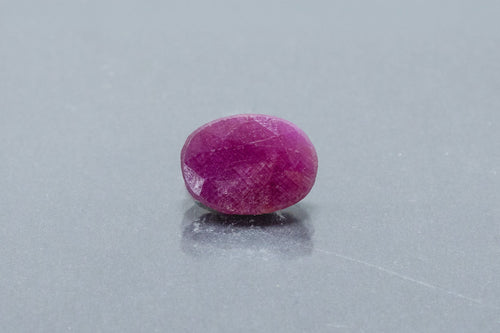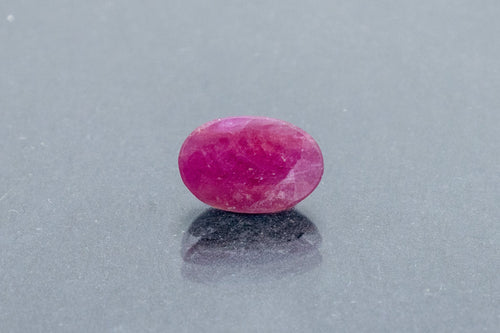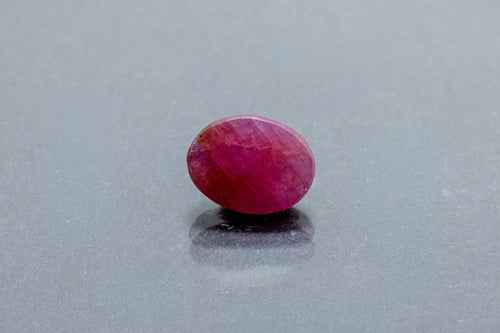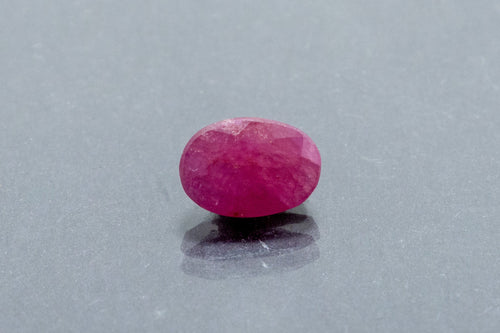


Both garnet and ruby flash that gorgeous deep red color that makes people stop and stare — and honestly, even experienced jewelry shoppers mix them up all the time. But here's the short answer if you need it right now: Ruby is a precious corundum gemstone colored by chromium, with a Mohs hardness of 9, while garnet is a group of silicate minerals with a hardness of 6.5–7.5. Ruby is significantly rarer and more expensive, garnet is more abundant and budget-friendly — and `the easiest way to tell them apart is by holding them up to light (garnet shows rainbow flashes, ruby doesn't).
Now let's go deeper, because once you understand what actually makes these two stones different, you'll never confuse them again.
Know the difference b/w Natural Ruby vs Lab Grown Ruby.
What Exactly Is a Ruby?
Ruby Gemstone belongs to the corundum family — the same mineral that gives us sapphires. The only difference is color. When corundum gets its red hue from trace amounts of chromium, it becomes a ruby. Without chromium? You've got a sapphire in some other shade.
Ruby is classified as one of the "Big Four" precious gemstones alongside diamond, sapphire, and emerald. It scores a 9 on the Mohs hardness scale, making it the second hardest natural gemstone in the world after diamond. That extreme durability is one reason rubies have been used in royal jewelry and religious artifacts for thousands of years.
Key origins: Myanmar (Burma), Sri Lanka, Thailand, Mozambique, and Cambodia.
What Exactly Is a Garnet?
Here's something most people don't realize — garnet isn't a single stone. It's actually a family of over 20 silicate minerals that share a similar crystal structure. The five commercially important species are pyrope, almandine, spessartine, grossularite, and andradite.
Red garnet is the most iconic, but this family also comes in orange (spessartine), green (tsavorite and demantoid), yellow, purple (rhodolite), and even rare blue varieties. Each type gets its color from different mineral compositions — red garnets typically owe their color to iron.
The red in garnet tends to look warmer and earthier than ruby — more of a wine-red or brownish-red compared to ruby's cooler, chromium-driven true red. That's not a flaw — it's just a different kind of beautiful.
Key origins: India, Sri Lanka, USA, Russia, Brazil, Africa.
Garnet vs Ruby: The Key Differences Explained
| Feature | Garnet | Ruby |
|---|---|---|
| Mineral Family | Silicate group (20+ species) | Corundum (aluminum oxide) |
| Chemical Formula | A₃B₂(SiO₄)₃ | Al₂O₃ + Chromium (Cr³⁺) |
| Hardness (Mohs) | 6.5 – 7.5 | 9.0 |
| Color Range | Red, orange, green, yellow, purple, black | Red only (corundum in other colors = sapphire) |
| Red Color Cause | Iron (Fe) | Chromium (Cr³⁺) |
| Refractive Index | 1.714 – 1.888 | 1.762 – 1.770 |
| Fluorescence | None | Strong under UV light |
| Rarity | Common, found worldwide | Rare, especially fine quality |
| Price (per carat) | ₹500 – ₹5,000 (avg) | ₹10,000 – ₹5,00,000+ |
| Birthstone | January | July |
| Crystal System | Isometric (cubic) | Trigonal |
1. Color — They Look Similar But Aren't Identical
This is where most people get tripped up. Side by side, here's what you'll notice:
| Garnet | Ruby | |
|---|---|---|
| Tone | Warmer, earthy red with brown/orange undertone | Cool, vivid red with slight blue/purple undertone |
| Saturation | Moderate to deep | High, saturated "true red" |
| Light Behavior | Throws rainbow flashes (yellow/green bands) in bright light | No rainbow effect; glows uniformly red |
| UV Fluorescence | None | Strong red glow |
The "rainbow in the light" test is actually one of the fastest ways to tell them apart at home. Hold the stone to a lamp or sunlight — if you see flashes of yellow and green mixed in, it's almost certainly garnet.
2. Hardness & Durability — Ruby Wins Easily
Ruby at Mohs 9 vs garnet at 6.5–7.5 is not a small gap. In practical terms:
- Ruby is safe for daily wear in rings, bracelets, and anything that takes a beating.
- Garnet can scratch more easily and may chip with hard impacts — it's better suited for earrings, pendants, and occasional-wear rings.
- For engagement rings and heirloom pieces meant to last generations, ruby is the far more practical choice.
You can learn more about how to wear Ruby gemstone .
3. Garnet vs Ruby Price — A Very Big Difference
This is often what brings people to this topic in the first place. The price gap between garnet and ruby stone is significant:
| Quality | Garnet (per carat) | Ruby (per carat) |
|---|---|---|
| Commercial | ₹300 – ₹1,500 | ₹5,000 – ₹20,000 |
| Good | ₹1,500 – ₹5,000 | ₹20,000 – ₹1,00,000 |
| Fine / Collector | ₹5,000 – ₹20,000 | ₹1,00,000 – ₹5,00,000+ |
| Exceptional (Burmese) | Rare | ₹10,00,000+ per carat |
So is garnet more expensive than ruby? Almost never. Fine rubies — especially untreated, Burmese "pigeon blood" stones — are among the most expensive gemstones on earth. Garnets are widely available and affordable. The only exception: rare demantoid or tsavorite garnets can approach fine-quality ruby prices, but that's uncommon.
The value of garnet vs ruby also depends heavily on treatment. Most commercial rubies are heat-treated to improve color; untreated rubies carry a premium. Garnets are generally untreated and sold as-is.
4. How to Tell Garnet from Ruby — Practical Tests
If you've bought a stone and you're not sure which one it is, here are the tests I recommend:
| Test | What to Do | Garnet Result | Ruby Result |
|---|---|---|---|
| Light Test | Hold to bright light or sunlight | Rainbow bands (yellow/green) visible | Uniform deep red, no rainbow |
| UV Light | Shine UV torch on the stone | No reaction | Glows bright red |
| Magnification | Look under 10x loupe | Usually clean, fewer inclusions | Often shows silk (rutile needles) or fingerprint inclusions |
| Hardness Test | Scratch quartz (Mohs 7) | May or may not scratch | Easily scratches quartz |
| Refractive Index | Gemological refractometer | 1.714–1.888 | 1.762–1.770 |
| Professional | Visit a certified gemologist | Confirmed via spectroscopy | Confirmed via spectroscopy |
The UV test and the light test together will get you to the right answer in most cases without any equipment. For absolute certainty, always consult a GIA-certified gemologist.
5. Rhodolite Garnet vs Ruby — The Most Confusing Comparison
If standard red garnet looks close to ruby, rhodolite garnet takes the confusion to another level. Rhodolite is a blend of pyrope and almandine garnets and shows a raspberry-pink to purplish-red color that's genuinely stunning.
| Feature | Rhodolite Garnet | Ruby |
|---|---|---|
| Color | Raspberry, rose-red, purplish-red | Pure red to slightly bluish-red |
| Hardness | 7.0 – 7.5 | 9.0 |
| Fluorescence | None | Strong red |
| Price | ₹1,500 – ₹15,000 per carat | Much higher |
| Clarity | Usually eye-clean | Often included |
Rhodolite is one of the most beautiful garnets available and is genuinely mistaken for ruby in finished jewelry. The giveaway: hold it under UV — it won't glow. And it'll still show those rainbow-colored light flashes if you look carefully.
Which Should You Choose?
Here's my honest take as someone who works with gemstones daily:
Choose Ruby if:
- You want a precious, heirloom-quality gemstone
- It's for an engagement ring or daily-wear jewelry
- You're buying as an investment or collector piece
- You want that vivid, unmistakable "King of Gems" red
Choose Garnet if:
- Budget is a consideration and you want a stunning red stone
- You're buying for everyday fashion jewelry (not a ring you'll wear constantly)
- You want a larger stone for the price — garnets come in bigger sizes more readily
- You're drawn to the warmer, earthier aesthetic of garnet's color
Neither stone is "better" — they serve different purposes and different people. A fine rhodolite garnet in rose gold is one of the most beautiful pieces you can own, full stop.

Frequently Asked Questions
Q: Is garnet the same as ruby?
No. Garnet and ruby are completely different gemstones. Ruby is a precious corundum stone colored by chromium, while garnet is a family of silicate minerals. They belong to different mineral groups entirely.
Q: How can I tell garnet from ruby at home?
Hold the stone up to a bright light source. If you see rainbow-colored flashes (yellow and green bands), it's most likely garnet. Ruby doesn't produce this rainbow effect. You can also use a UV torch — ruby glows bright red, garnet doesn't react.
Q: Is garnet more expensive than ruby?
No. Ruby is almost always more expensive than garnet. Fine rubies are among the priciest gemstones in the world, while garnet is relatively affordable and widely available. The only exception is extremely rare garnet varieties like demantoid or tsavorite.
Q: What is the color difference between garnet and ruby?
Ruby has a vivid, cool-toned "true red" with a slight blue or purple undertone. Garnet red tends to be warmer, sometimes showing brown or orange undertones. Under bright light, garnet disperses rainbow colors; ruby maintains a consistent red glow.
Q: Can garnet and ruby look identical?
To the naked eye, especially in low light, they can look very similar — particularly almandine or rhodolite garnets versus lower-quality rubies. The differences become clear under magnification, UV light, or when using a gemological refractometer.
Q: Which gemstone is better for an engagement ring — garnet or ruby?
Ruby is the better choice for an engagement ring due to its superior hardness (Mohs 9 vs 6.5–7.5). It handles daily wear far better. Garnet, while beautiful, is more vulnerable to scratching and chipping with everyday use.
Q: What is the difference between rubies and garnets as birthstones?
Garnet is the birthstone for January, associated with Capricorn and the 2nd wedding anniversary. Ruby is the birthstone for July, associated with Cancer and the 40th wedding anniversary.
Q: What is a raw ruby vs raw garnet — can you tell them apart?
In rough, uncut form, raw ruby and raw garnet can both appear as dark red crystals. Ruby rough tends to have a hexagonal barrel-like crystal form, while garnet rough typically forms as dodecahedral (12-faced) crystals. A hardness test with a steel file (Mohs ~6.5) can help: ruby won't scratch, garnet might.
Read more about Ruby vs Pink Sapphire.