

Yellow Sapphire (Pukhraj)
Yellow Sapphire, also known as Pukhraj, is admired for its bright golden-yellow colour and brilliance. Traditionally associated with Jupiter, it is considered a significant gemstone in Vedic astrology.
Wisdom & Prosperity | Knowledge | Abundance | Success

Yellow Sapphire (Pukhraj)
Yellow Sapphire, also known as Pukhraj, is admired for its bright golden-yellow colour and brilliance. Traditionally associated with Jupiter, it is considered a significant gemstone in Vedic astrology.
Wisdom & Prosperity | Knowledge | Abundance | Success
Govt. Lab Certified
IGI / IEGL Certificate (Options Available)
Free Energization
Vedic mantra se energized
100% Money-Back
If found treated, double refund
Insured Delivery
Free shipping, 2-4 days pan-India
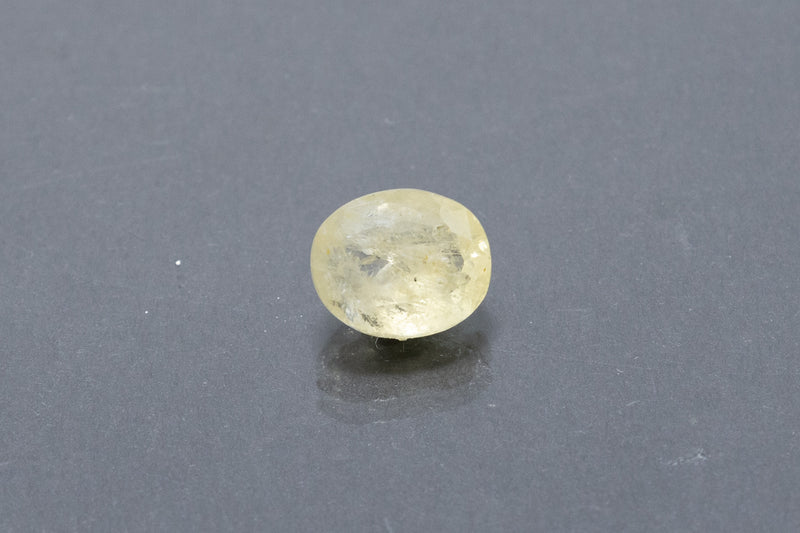 20% OFF
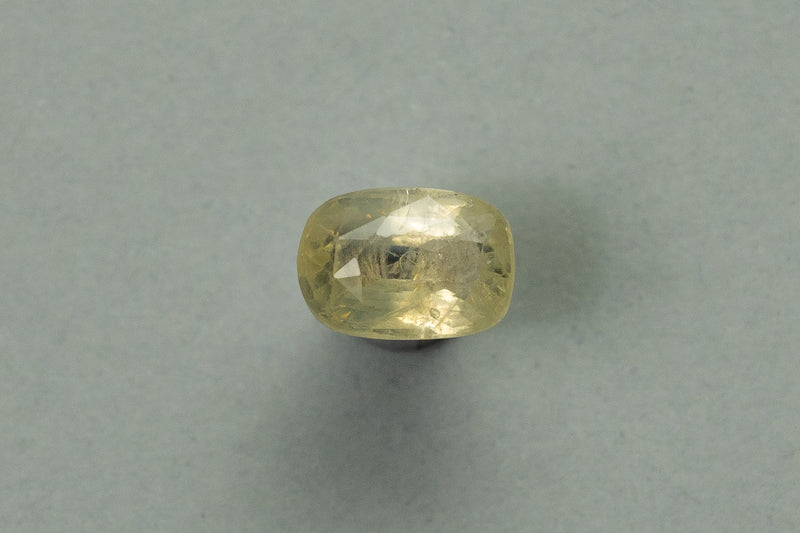
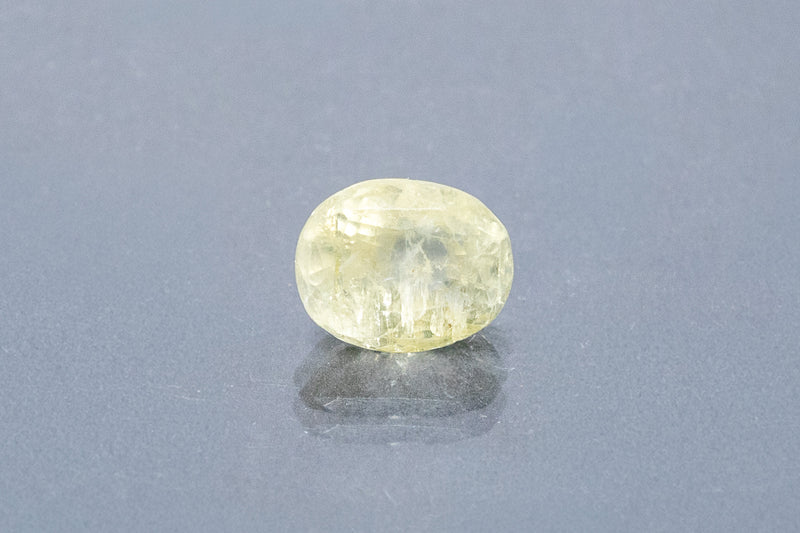
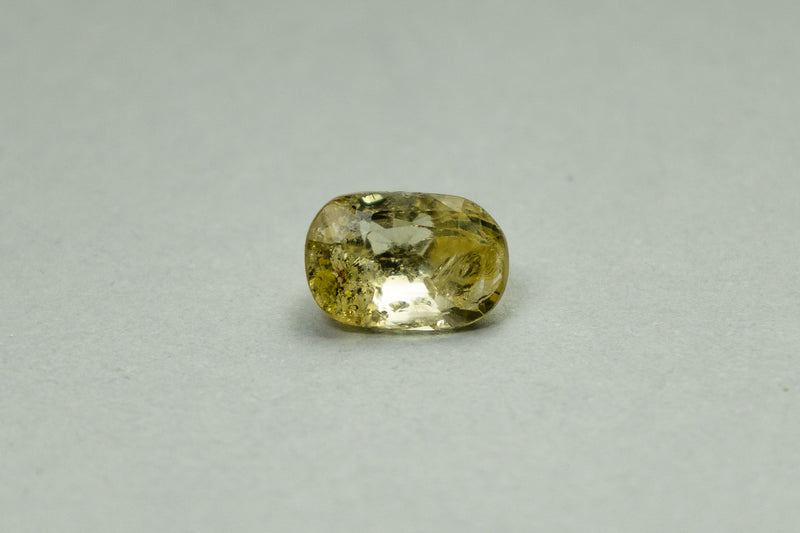
Yellow Sapphire (Ceylon) - 4.30 Carat
Origin: Sri Lanka
You save Rs. 6,718.75
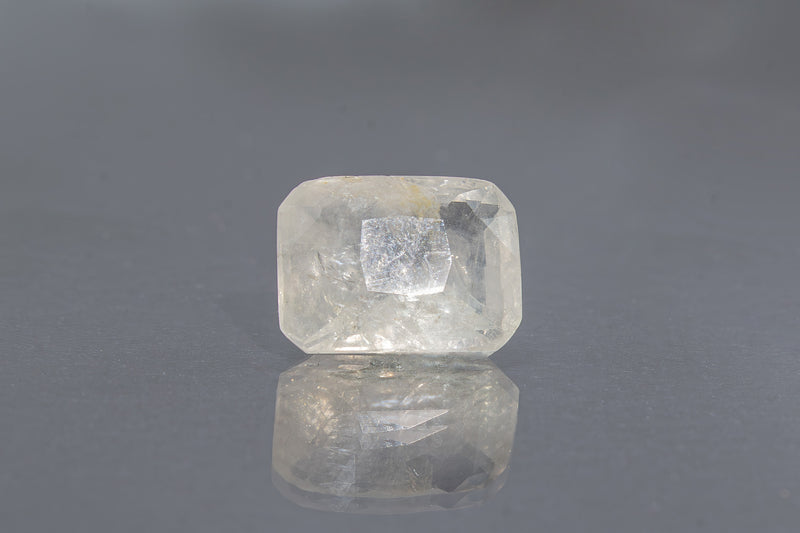 20% OFF
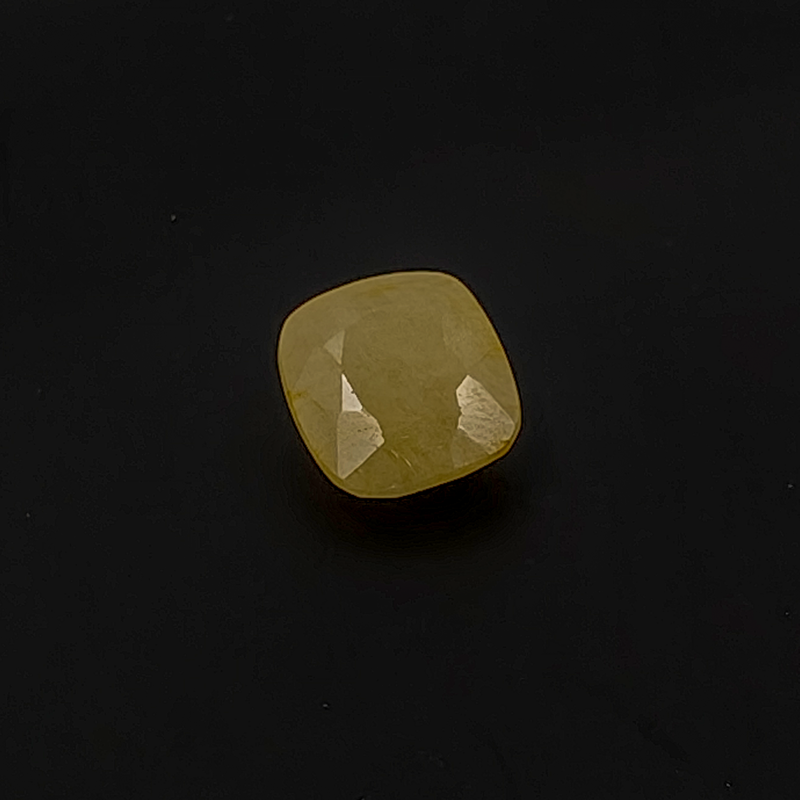 20% OFF
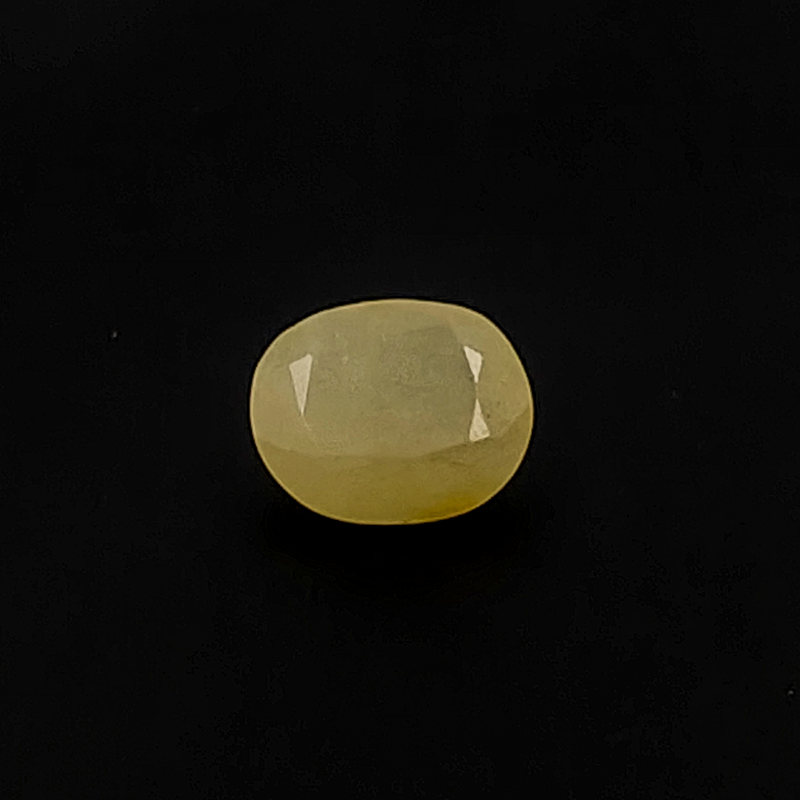 20% OFF
 20% OFF
 20% OFF
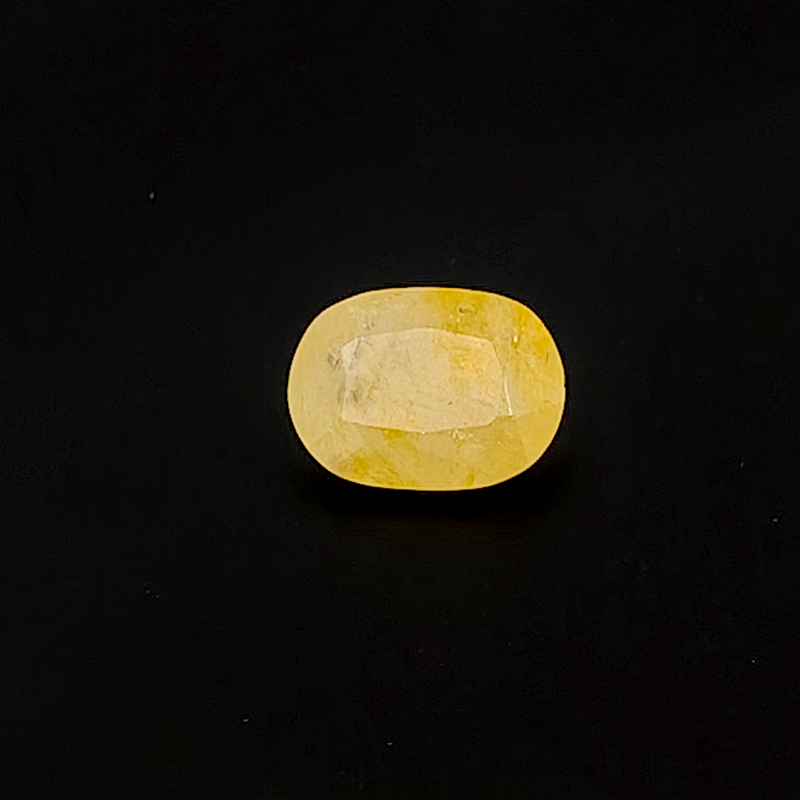
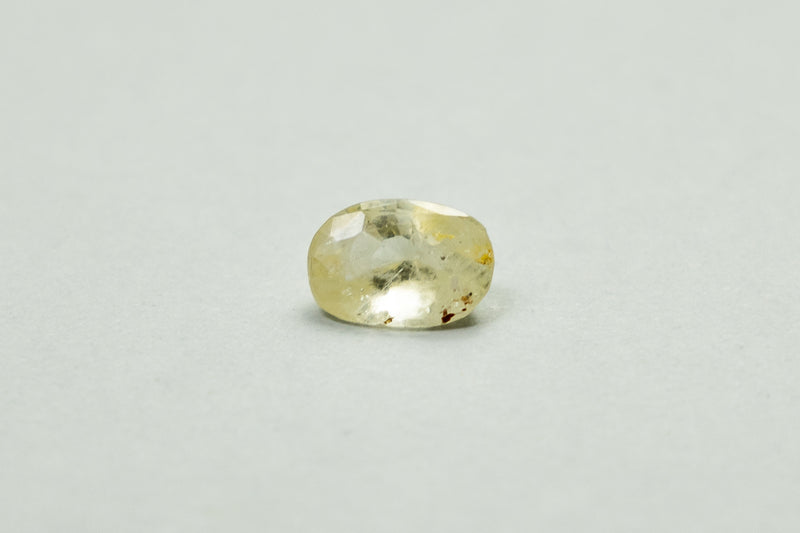
Yellow Sapphire (Ceylon) - 4.26 Carat
Origin: Sri Lanka
You save Rs. 6,443.25
 20% OFF
 20% OFF
 20% OFF
 20% OFF
 18% OFF
 10% OFF
 20% OFF
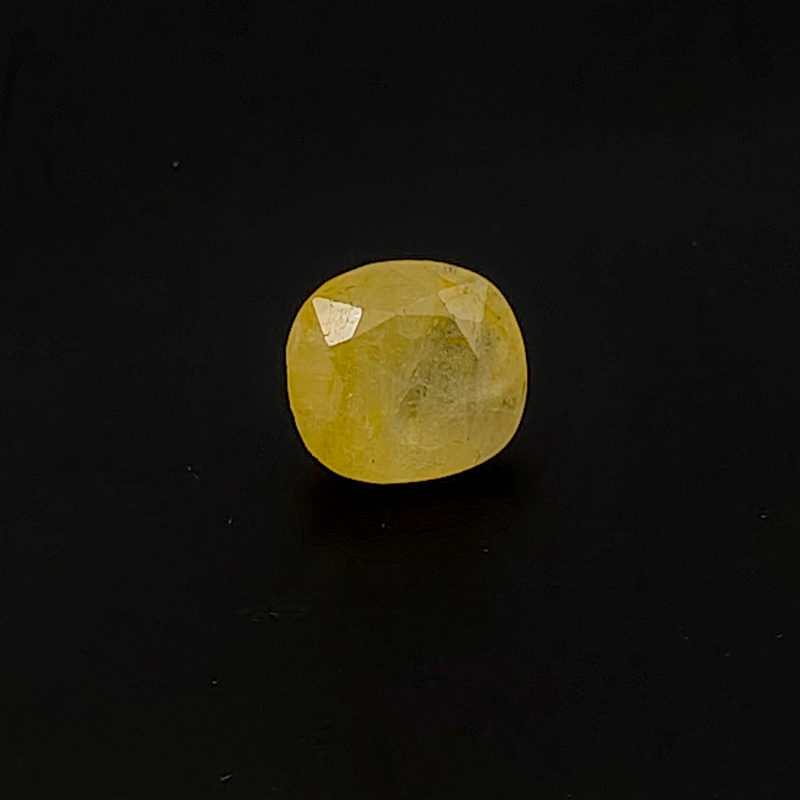 20% OFF
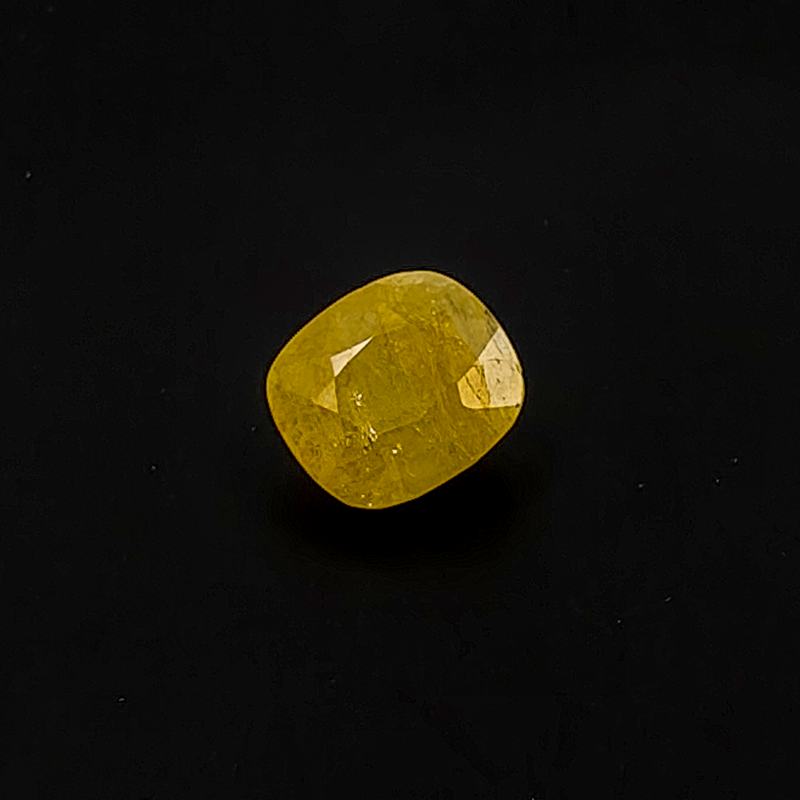 20% OFF
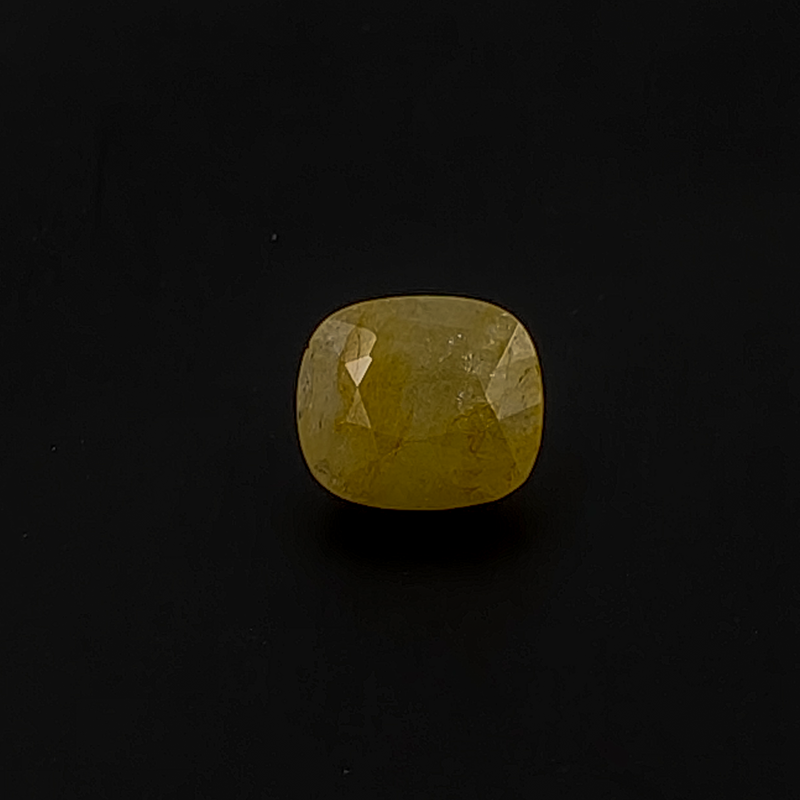 20% OFF
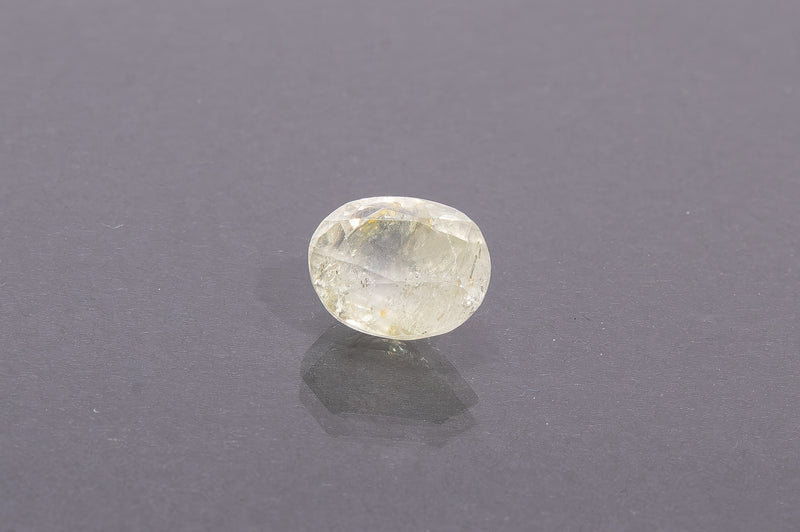 20% OFF
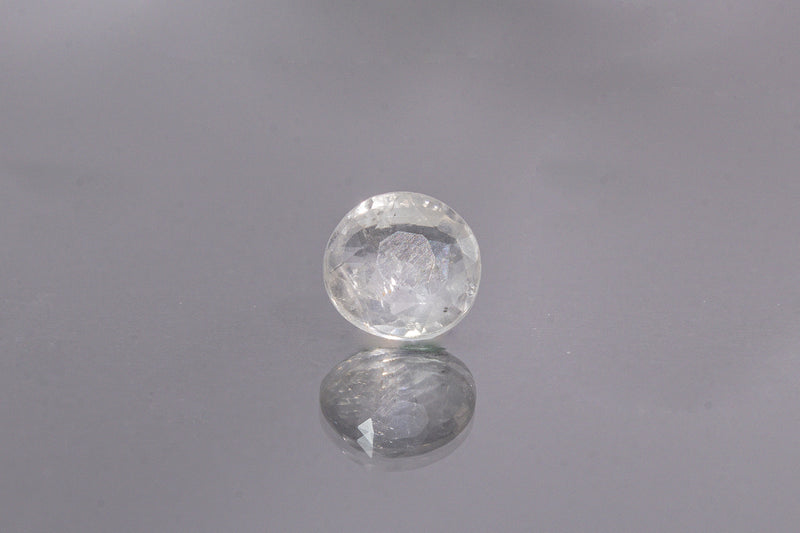 20% OFF
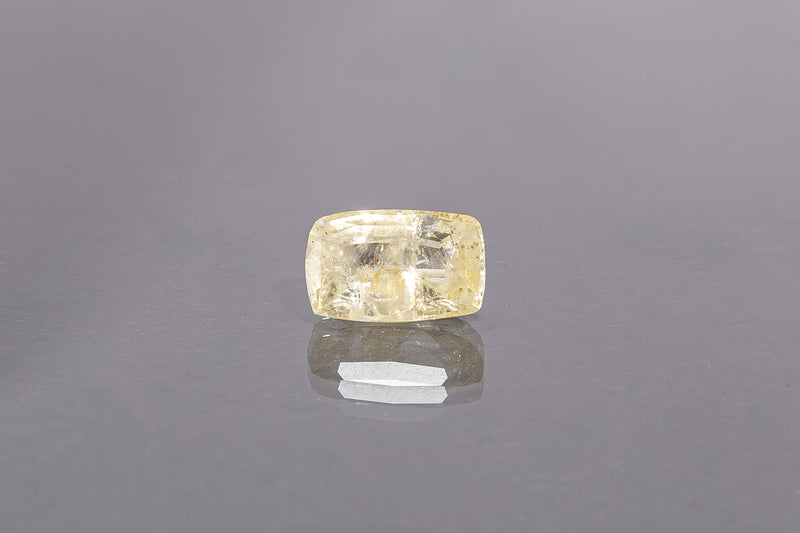 20% OFF
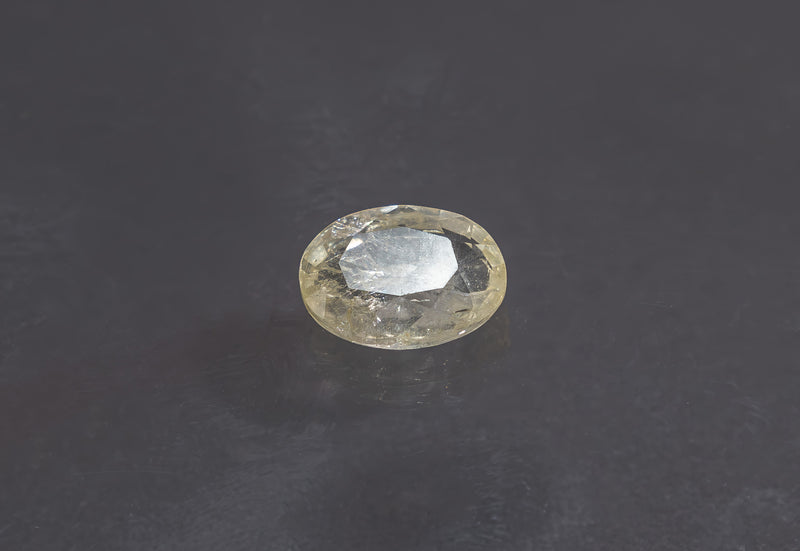 20% OFF
Need Help Choosing a Gemstone?
Have questions about a gemstone, its quality, colour, clarity or specifications? Our gemologist can help you understand the details before you buy.
About Yellow Sapphire (Pukhraj)
Yellow sapphire is the yellow variety of the mineral corundum. In India it is known as Pukhraj or Pukhraj Ratna. In Sanskrit texts it appears as Pushparaga, and many people call it Guru Ratna because it belongs to Jupiter (Guru or Brihaspati) in Vedic astrology. Jupiter is the planet of wisdom, learning, growth and good fortune.
If you want to buy yellow sapphire online, this page will guide you. It covers the quality factors, what shapes the yellow sapphire price, how to wear a pukhraj stone and how to care for it.
What Is Yellow Sapphire?
Mineral composition. Yellow sapphire is aluminium oxide (Al₂O₃), the same mineral as ruby and blue sapphire. Pure corundum is colourless. In yellow sapphire, the colour comes mainly from trace iron in the crystal. Some stones also owe part of their colour to natural colour centres created by radiation in the earth.
Key properties.
| Property | Yellow sapphire |
| Mineral | Corundum (Al₂O₃) |
| Mohs hardness | 9 (only diamond is harder) |
| Refractive index | About 1.76–1.77 |
| Specific gravity | About 3.95–4.03 |
| Crystal system | Trigonal |
Geological formation. Corundum forms deep underground under high heat and pressure, in metamorphic rocks such as marble and gneiss, and in some volcanic rocks such as basalt. Rivers carry the crystals into gravel beds, where many yellow sapphires are mined today.
Colour variations. Yellow sapphire runs from pale lemon yellow to rich golden yellow. Some stones lean greenish, orange or brownish. The most popular shades are a pure, vivid canary or golden yellow. Orange-yellow stones are sometimes sold as golden sapphire, and orange-pink stones are called padparadscha, which is a separate category.
Major origins.
- Sri Lanka (Ceylon): The most trusted source for bright, clean yellow sapphires. Many buyers search for \Ceylon pukhraj\ for this reason.
- Thailand and Cambodia: Long-established sources, often with deeper golden or slightly greenish tones.
- Australia: Supplies large quantities of darker yellow and greenish-yellow stones.
- Madagascar and Tanzania: Modern sources producing a wide range of qualities.
- Myanmar (Burma) and Montana (USA): Smaller sources for fine stones.
Benefits of Yellow Sapphire
The benefits below come from Vedic astrology, gemmological tradition and cultural belief. They are not scientifically proven, and experiences differ from person to person. Yellow sapphire is not a substitute for medical, financial or legal advice.
Astrological Significance and Traditional Benefits
In Vedic astrology, Jupiter represents wisdom, education, teachers, children, wealth and good fortune. According to astrological traditions, wearing Pukhraj can strengthen Jupiter's positive influence in a birth chart. It is traditionally believed to support:
- Education, learning and higher knowledge.
- Career growth, especially in teaching, advisory, law, finance and counselling roles.
- Prosperity and financial stability.
- Marriage prospects. Jupiter is considered a key planet for marriage in a woman's chart.
- Family harmony and matters related to children.
These are traditional beliefs. Astrologers stress that results depend on the birth chart and the planetary period running at the time.
Spiritual Significance
Jupiter is the guru, the planet of dharma and faith. In this tradition, Pukhraj is linked with spiritual growth, devotion and the guidance of teachers. Many wearers treat it as a reminder to stay humble, truthful and open to learning.
Traditional Mental and Emotional Associations
It is traditionally believed that yellow sapphire brings optimism, a positive outlook and mental clarity. Yellow is often seen as the colour of warmth and confidence. These are cultural associations and not clinical claims.
Who Should Wear Yellow Sapphire?
Ruling planet: Jupiter (Guru or Brihaspati).
Zodiac signs. Jupiter rules Sagittarius (Dhanu) and Pisces (Meen). Traditionally, yellow sapphire is considered for these signs. It is also commonly suggested for Aries, Cancer, Leo and Scorpio ascendants, since the Sun, Moon and Mars are regarded as friendly to Jupiter.
Your sign is only a starting point. An astrologer will check where Jupiter sits in your chart, which houses it rules, its strength and your current dasha before recommending Pukhraj.
How to Wear Yellow Sapphire?
The guidance below follows common Vedic traditions. Practices can vary by birth chart, family custom and astrologer. Please confirm the details with your astrologer.
| Aspect | Traditional guidance |
| Metal | Gold is most commonly recommended. Some astrologers also accept silver or panchdhatu. |
| Finger | Index finger of the right hand (Jupiter's finger). Some traditions allow the left hand. |
| Day | Thursday, ideally during Shukla Paksha (the waxing moon phase). |
| Auspicious time | Thursday morning, often in Guru Hora, or when the moon is in a Jupiter nakshatra (Punarvasu, Vishakha or Purva Bhadrapada). Ask your astrologer for an exact muhurat. |
| Weight | Traditionally, at least 3 ratti is advised, and 3 to 7 ratti is commonly suggested. One ratti is about 0.91 carat, so 5 ratti is roughly 4.5 carats. The right weight depends on the chart and your budget. |
| Mantra | 'Om Gram Greem Graum Sah Gurave Namah', chanted 108 times. Some traditions chant it far more often. |
| Purification | Soak the stone in raw milk and Ganga jal (or clean water), with a little honey in some traditions. Rinse with clean water and wipe dry. |
| Energisation (pran pratishtha) | Place the stone before an image of Lord Vishnu or Brihaspati, light a lamp, offer yellow flowers and chant the mantra. Then wear it. |
A note on the trial period. Many astrologers suggest keeping the stone with you for a short period before wearing it, to see how you feel. This is a traditional practice and not a guarantee of any result. If you feel uneasy, stop and consult your astrologer.
For astrological use, the stone should touch the skin, so an open-back setting is generally preferred.
What to Check Before You Buy Yellow Sapphire
Check these seven factors before you buy a natural yellow sapphire. They decide how the stone looks, how rare it is and what it is worth.
1. Colour
Colour is the most important factor. The finest stones show a vivid, even golden or canary yellow. Very pale stones look weak, while stones with strong brown, orange or green tints lose value. Uneven colour, with darker or lighter patches, is a drawback.
2. Clarity and Inclusions
Yellow sapphires are often cleaner than blue ones, so buyers expect good clarity. Look for an eye-clean stone. Common inclusions include fine needles, small crystals and healed fractures. Visible cracks or cloudy areas reduce both beauty and durability. Heavily included stones are priced much lower.
3. Cut
A good cut brings out the stone's colour and sparkle. Check symmetry, polish and proportions. A shallow cut can show a see-through \window\ in the centre, and a deep cut can look dark. Oval and cushion are the most common shapes. For astrological use, the shape matters less than quality and weight.
4. Carat Weight
Sapphire is sold by the carat (0.2 gram). Large, fine-quality yellow sapphires are harder to find, so price per carat rises with size. For astrological use, weight is often discussed in ratti, so follow your astrologer's advice and your budget.
5. Origin
Origin influences price and reputation. Sri Lankan (Ceylon) stones are widely admired for clean, bright colour. Thai, Australian and African stones range from commercial to fine quality. A fine stone from any origin can be a good purchase. Only a laboratory can confirm origin.
6. Natural or Synthetic Status
A natural yellow sapphire formed in the earth. A synthetic stone is made in a lab with the same chemistry and costs far less. Synthetic stones are not suitable for astrological use. Imitations include glass, citrine, yellow topaz and yellow beryl. Only a laboratory can reliably tell natural stones from synthetic ones and imitations. Curved growth lines and gas bubbles are clues but not proof.
7. Treatment Status
Most yellow sapphires on the market are heat-treated to improve colour and clarity. This is widely accepted when disclosed. Unheated stones are rarer and cost more. Yellow and orange sapphires are also known for beryllium diffusion treatment, which adds colour near the surface and lowers value. Some natural yellow stones with unstable colour centres may fade in strong light, which is another reason to ask about treatment and stability.
How to Clean and Care for Yellow Sapphire
Yellow sapphire is hard and durable, but good habits keep it looking fresh.
Safe cleaning method
- Mix lukewarm water with a few drops of mild dish soap.
- Soak the jewellery for 15–20 minutes.
- Clean gently with a soft toothbrush, including behind the stone.
- Rinse in clean water and dry with a soft cloth.
Yellow Sapphire Price Guide
The yellow sapphire price depends mainly on colour, clarity, treatment, origin and carat weight. There is no single pukhraj stone price. Natural yellow sapphires range from affordable to very expensive.
Market rates change, so we do not publish fixed per-carat figures here. Each product page shows the current natural yellow sapphire price along with weight, origin, treatment and certificate details.
Factors That Affect Pukhraj Stone Price
| Factor | How it affects yellow sapphire price |
| Colour quality | The biggest driver. Vivid, even golden yellow is valued most. Pale, brownish or greenish stones are cheaper. |
| Clarity | Eye-clean stones cost more. Visible cracks or cloudiness reduce value. |
| Cut and finish | Good symmetry and polish improve brilliance and price. Poorly cut stones look dull. |
| Carat weight | Price per carat rises with size because fine large stones are scarce. |
| Origin | Sri Lankan stones are well regarded and often carry a premium. Others vary by quality. |
| Treatment | Unheated stones cost more than heated ones. Diffusion-treated and fracture-filled stones cost much less. |
| Certification | A report from a recognised laboratory confirms that the stone is natural and shows its treatment. It adds buyer confidence. |
| Overall quality | The combination of all factors. A stone that is strong in several areas is worth far more than one that is strong in just one. |
Why Buy Yellow Sapphire from AstroSage Shop?
AstroSage is trusted for astrology guidance, and AstroSage Shop brings gemstone buying together with that expertise. When you buy pukhraj stone online here, you can expect:
- Natural gemstone options: A choice of natural yellow sapphire (pukhraj) stones for different budgets, sizes and purposes.
- Authenticity information: Product pages share certification and authenticity details so you know what you are buying.
- Clear specifications: Weight, dimensions, shape, origin and treatment details are listed for each stone where available.
- Variety: Loose stones and jewellery options in different weights, so you can match your astrologer's advice.
- Customer assistance: Our support team can help with questions about stone details and your order.
- Return and exchange policy: Our return and exchange terms are published on the website. Please read them before ordering.
If you are unsure which weight or quality suits you, speak to an astrologer first, then browse the collection above. Compare stones by colour, clarity, treatment and certificate, and choose the one that fits your needs.
For deeper guidance, read our detailed articles on yellow sapphire benefits, Pukhraj wearing rules and how to identify a natural yellow sapphire.