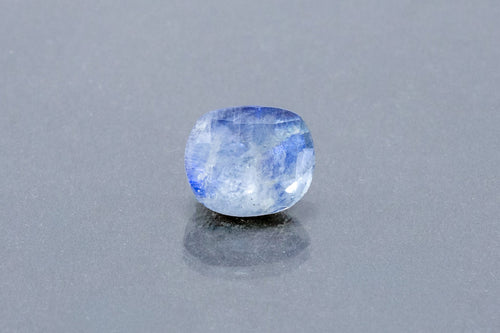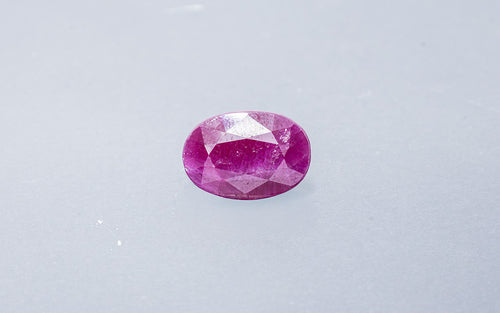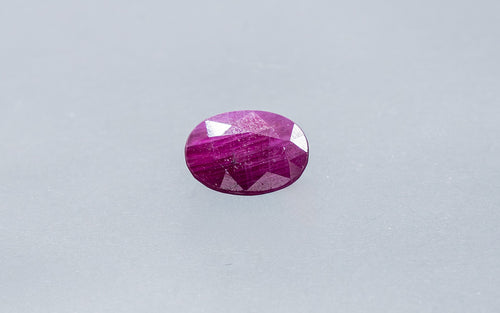


The main difference between sapphire and ruby is colour: ruby is the red variety of corundum, while sapphire includes the other colours, such as blue, yellow, pink, and white. Both gemstones have a Mohs hardness of 9, making them suitable for many types of everyday jewellery. Neither is automatically better—the right choice depends on your preferred colour, budget, and reason for wearing it.
When comparing sapphire vs ruby gemstone, it helps to look beyond the familiar blue and red colours. Treatment, clarity, cut, and the quality of the individual stone can matter more than its name.
Sapphire vs Ruby: Quick Comparison
| Feature | Sapphire | Ruby |
|---|---|---|
| Mineral family | Corundum | Corundum |
| Colour | Blue, pink, yellow, green, purple, orange, colourless, and others | Red, sometimes with purple or orange undertones |
| Mohs hardness | 9 | 9 |
| Colour-causing elements | Vary by colour; iron and titanium produce blue | Chromium produces red |
| Birthstone month | September | July |
| Everyday jewellery | Generally suitable; treatment and condition matter | Generally suitable; treatment and condition matter |
| Price comparison | Depends on the individual stone’s quality, size, treatment, and origin | Depends on the individual stone’s quality, size, treatment, and origin |
| Main reason to choose | A wider choice of colours | A preference for red |
These shared properties explain why sapphire and ruby often appear in similar jewellery designs, even though their colours create very different looks.
Difference Between Sapphire and Ruby in Colour
Colour is the most noticeable difference between sapphire and ruby. It also plays an important role in how attractive a particular stone looks and how it is valued.
- Ruby offers a range of red tones: Some rubies show a bright red colour, while others have noticeable purple or orange undertones. When choosing one, look at whether the colour appeals to you and whether the stone remains lively in ordinary lighting. A very dark appearance can hide details that make the gemstone attractive.
- Sapphire gives you more colour choices: Blue sapphire is only one option. A buyer who prefers a lighter look might consider pink or yellow sapphire, while someone seeking a deeper colour may prefer blue or green. Comparing several shades can help you find a stone that works with the jewellery you already wear.
-
Pink sapphire and ruby can be difficult to separate: Both may owe their colour to chromium, and the boundary between pink and red can involve differences in interpretation. GIA uses comparison stones to assess this distinction and requires red to be the dominant hue for a ruby classification. For a borderline stone, rely on a reputable laboratory’s identification.
Sapphire vs Ruby Hardness: Which Is More Durable?
Sapphire and ruby have the same Mohs hardness of 9. Neither has a general advantage in scratch resistance simply because it is sapphire or ruby. Both also have excellent toughness, making them useful choices for rings and other frequently worn jewellery.
- Both can work well for regular wear: If you are comparing ruby vs sapphire for an everyday ring, either can be a practical choice. Focus on the condition of the actual gemstone and whether the setting protects it appropriately. A well-made ring matters as much as choosing a durable mineral.
- Hardness does not mean unbreakable: The Mohs scale measures resistance to scratching, rather than resistance to every type of damage. A hard impact can still damage a gemstone or loosen it from its setting. Remove valuable jewellery before activities that could expose it to strong knocks.
-
Treatments can change care requirements: Fracture-filled stones need greater care because their fillers can be vulnerable to chemicals and cleaning methods. Ask about treatment before deciding that a particular ruby or sapphire is suitable for your routine.

Sapphire vs Ruby Price: Which Is More Expensive?
Fine rubies can command very high prices, but exceptional sapphires can also be extremely valuable. A useful comparison looks at individual stones with similar size, quality, and treatment status.
- Colour and appearance influence value: A gemstone with attractive, well-distributed colour may be priced differently from one that looks overly dark or uneven. Instead of judging from the colour name alone, compare how the stones actually look. View them under similar lighting and ask for clear photographs or videos if buying online.
- Treatment makes a difference: A natural gemstone may still have undergone treatment. For fine sapphire, independent confirmation that there is no evidence of heating can add to rarity and value. Compare treatment disclosures carefully so that a lower price does not lead you to assume two stones are equivalent.
-
Origin should be supported by documentation: Geographic origin can influence market value, but a famous location does not make every stone from that location high quality. If a seller charges a premium for origin, ask what evidence supports the claim. Some laboratory reports provide an origin opinion when it can be determined.
Frequently Asked Questions
1. What is the main difference between sapphire and ruby?
The main difference is colour. Ruby is red corundum, while sapphire covers the other colour varieties of corundum. Their shared mineral structure means they have many similar physical properties, including the same Mohs hardness.
2. Is ruby more expensive than sapphire?
Not always. Fine ruby can be very expensive, but exceptional sapphire can also command high prices. Compare individual stones by colour, size, clarity, treatment, and documented origin rather than assuming one gemstone is always worth more.
3. Is sapphire harder than ruby?
No. Sapphire and ruby both rank 9 on the Mohs hardness scale. Their suitability for a particular piece of jewellery also depends on condition, treatment, and setting.
4. Are all sapphires blue?
No. Sapphires also occur in pink, yellow, green, orange, purple, and colourless varieties, among others. Red gem-quality corundum is classified as ruby, which is why “red sapphire” is not the usual gemological name.
5. Is pink sapphire the same as ruby?
Pink sapphire and ruby belong to the same mineral family, but they are different colour varieties. The boundary between pink and red can be difficult to judge. A reputable laboratory report is helpful when classification is uncertain.
6. Which is better for an engagement ring: sapphire or ruby?
Both can be suitable for engagement rings. Choose according to the colour you enjoy, the stone’s condition and treatment, and the quality of the setting. Sapphire offers more colour options, while ruby suits someone specifically looking for red.
7. Can ruby and sapphire be worn together?
Yes, they can be combined in jewellery. The design should hold both stones securely and suit their individual care needs. If you are asking for astrological reasons, compatibility beliefs vary and are separate from their suitability for jewellery.
Related Blog